Friday, April 15, 2016

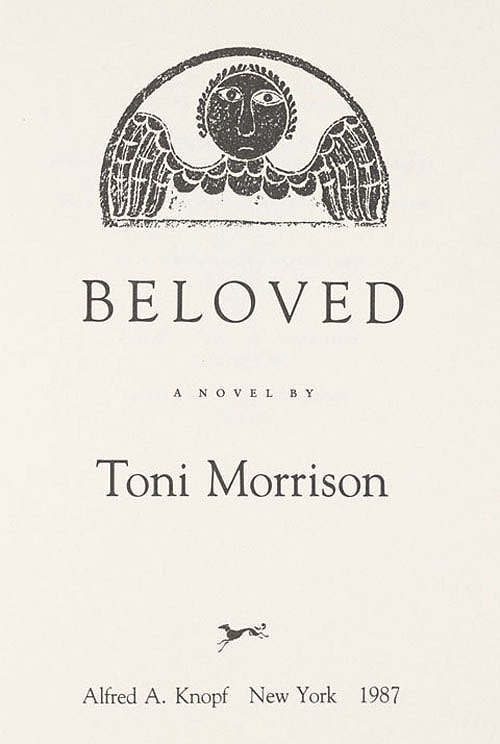
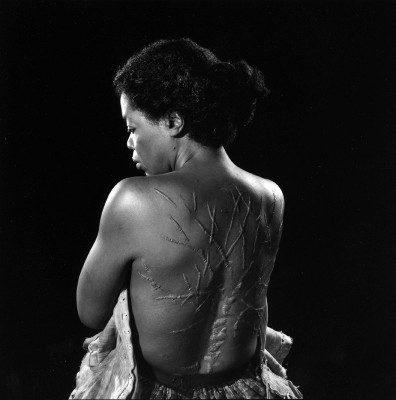
Beloved by Toni Morrison


If Senator John Conyers ever gets H.R. 40 passed, a law he raises every senate session that allocates money to the study of the legacy of slavery and an assessment of reparations, Beloved by Toni Morrison should be at the top of the reading list.

Yes, Beloved is entirely fictional, though the story is loosely based off a bit of American slavery legend; a woman faced with returning to slavery because of the fugitive slave act, decides to kill her children rather than give them up. The legend is often alluded to as the stuff of rebellion, the ultimate rebellious act in the face of slavery; the destruction of one's own children in an effort to prove they belonged to no man. It's a story for martyrdom referenced in pop culture, from Nina Simone to Talib Kweli. Yet Morrison explores this idea, shattering the mythos of the martyr in favor of a far more haunting and vulnerable story. She delves into the narrative; humanizing both the mother, Sethe, and victimized child, Beloved, in a novel essentially about belonging.

While Sethe and Beloved are the center of the narrative, it is essentially about a community of former slaves escaped to Ohio, who are nothing but haunted by their former bondage. And Morrison knows how to haunt her characters. It's obvious slavery consumes all as the book drifts from present plot points and conversations into glimpses of perverse images - a man burning, a mentally broken slave, a hanging woman - all images of a former life at a Kentucky plantation called Sweet Home. If a character is walking or talking, deep in reverie or simply cooking a meal, the scene quickly devolves into vivid depictions of abuse, escape, and the pain reserved only for survivors of the very worst genocides history has to offer. The potency of these memories is proof enough that Morrison can write in a stunning and unrivaled way, she may be the only writer capable of truly humanizing the legacy of slavery. At any rate, she accomplishes something no non-fiction book on the topic could ever really do.
One of the demonstrations of Morrison's ability is the way she makes belonging a central theme. It is only later that we realize the burning man is a friend, the broken slave a husband, the hanging woman, a mother. The reason we, the reader, aren't greeted with these facts immediately is because Morrison is exploring what slavery teaches about belonging (it is no coincidence the villain in Beloved is named Teacher, the chief overseer at Sweet Home). If this book were non-fiction the thesis would essentially ask what happens to one's sense of belonging when they belong legally to another person. There is so much helplessness in Beloved, an eager desire to own oneself, the product of one's labor. Even the word beloved is used to refer to a cherished and treasured individual, someone who belongs to us. While this seems like it could quickly break down into common sense, to the obvious notion that slavery was bad for the individual slave psyche, it is Morrison's complete mastery of storytelling, of painfully interrupting the reader that keeps the reader entrapped.

And it isn't always violence the way many stories of slavery and racism must almost necessarily be. Morrison has proven it is possible to use imagery alone to jolt the reader, remind them that they are never in a safe space. One of my favorite examples of this is when Denver, one of Sethe's daughters, the only one born free, is at the home of a Dutch brother and sister who are considered "good whites", true champions of abolition. Denver is there asking for a job, but before the reader can feel too comfortable:

"Denver left, but not before she had seen, sitting on a shelf by the back door, a blackboy's mouth full of money. His head was thrown back farther than a head could go, his hands were shoved in his pockets. Bulging like moons, two eyes were all the face he had above the saying red mouth. His hair was a cluster of raised, widely spaced dots made of nail heads. And he was on his knees. His mouth, wide as a cup, held coins needed to pay for a delivery or other small service, but could just as well have held buttons, pins or crab apple jelly. Painted across the pedestal he knelt on were the words 'at yo service'"

This is all we see of the doll, but Morrison doesn't arbitrarily place it in the house of the only friendly whites in the novel. It is a simple yet vivid reminder that racism penetrates everywhere. This image isn't for Denver to see, but the reader. We are all familiar with the sambo, the helpless and stupid black boy that needs the white man to lead them. We know the depiction of sambo is the bulging white eyes and the red mouth. The isolated sentence describing him on his knees and the simplistic 'at yo service'. This was meant to haunt the reader even as something good starts developing for a truly lovable character.

Beloved is deeply disturbing, it's uncomfortable, it's unbelievability is unsettling and doesn't detract from the power with which Morrison writes. Many critics compare her to Faulkner in style, this is true and she compounds on it elegantly. But in content, Toni Morrison is truly one of a kind, writing humanity into a horrifying moment in history and shaming us deeply for forgetting it was ever there.

Thursday, March 24, 2016

Brief Interview with Hideous Men by David Foster Wallace


Picture David Lynch directing, not whole episodes, but single snatches of Seinfeld dialogue, and you've got the gist of David Foster Wallace's title story Brief Interviews with Hideous Men. It peppers this book of short stories, leaving off and picking up with different "subjects" (interviewees) as the other stories end. The reader, who it's presumed stands in for the interviewer, is represented by just the letter 'Q' in between large swaths of interviewee (these are allegedly the hideous men) monologue. There are intense layers of ironies amidst narratives ranging from graphic and disturbing to witty and downright hilarious. They sets the tone for all of the stories in the book, inviting the reader into an interrogation room and forcing them to ponder difficult questions about moments of growth or beauty or togetherness in the presence of intense trauma.


While the theme seems to be relatively consistent, these stories have extraordinary range in style. Even though each story is drastically different there is something so obviously David Foster Wallace persistent in each, that binds them together. Like DFW temprament is the One Ring or something. It also makes it difficult to point out any one story that stands out. Sure, there is truly intricate and beautiful prose like in Forever Overhead or Church Not Made with Hands, two stories that made me literally despair at how well they were written (the contemporary world of literature lost one of the true greats). Or there is the essential neurotic Wallace in The Depressed Person or Dantum Centurio, whose incessant repetition and over-technicality felt both hilarious and aggravating. In Octet you're met with Wallace's distinct brand of Meta-fiction, which at its worst could probably put any Woody Allen movie to shame; the way it teeters between begrudging self degradation and endearing honesty is refreshing for a style usually reserved for smugness or cynicism. And finally there is Wallace as just a really good story teller. For the reader who values plot over all else I'd give them Adult World, On His Deathbed, Holding Your Hand, and above all else; Signifying Nothing. Each with a radically disturbing element; fierce, hidden guilt about that disturbing element; and a coherent, linear plot the three stories are written the way short fiction should be written. Signifying Nothing is particularly artful at both pushing you way outside of your comfort zone and then comforting you there, possibly expanding something deep inside you, all in the course of a few pages.

Which is what makes this book of short stories so great. It is an introduction to Wallace's special kind of fiction, without delving into massive projects like Infinite Jest or the cripplingly sad (and long) Pale King. DFW believed vehemently that good fiction should disturb the comfortable and comfort the disturbed, a line I believe he borrowed from another author. Regardless, nothing speaks more to his dedication to this idea than Brief Interviews with Hideous Men. If you're looking for Foster Wallace fiction, or you're looking for the standard with which all short fiction should strive, this should be at the top of your list.


Thursday, February 25, 2016

Mislaid by Nell Zink


In Mislaid, Nell Zink isn't just arbitrarily zealous or unconventional and she doesn't make decisions on issues of race or gender without a deep consideration of literary tradition. Her many allusions to literature aren't for nothin'. She reads like a succinct Franzen, like you shrunk Freedom and forced it to address race. But Mark Twain is also present, so is Kafka, Beat Poets galore, and there is a palpable but nevertheless covert southern gothic tone reminiscent of, no kidding, William Faulkner.

On the other hand, Mislaid is all about not fitting in (no surprise there). While Zink effortlessly riffs of similarities she doesn't fit in with her predecessors or contemporaries. One could argue this is similar to her characters, but they'd be missing something subtle. Zink offers a widely diverse but intimately (and obscurely) connected cast of characters who, finding they don’t fit in with the traditional conservative settings they were born into, try to flee to progressive havens; a profoundly gay women's college, a hippy commune on a squirrel sanctuary, a university and small town obsessed with affirmative action, an abandoned house in a black community, and even the black community itself. But rather than finding where they were supposed to be as wildly different than where they were born, there is still a deep sense of being an outsider no matter where the characters find themselves. That's because to Zink, fitting in has nothing to do with finding the right people to reside with because even in "progressive" institutions (which are still institutions) fitting in is still a matter of permission. The politics of race and gender are everywhere; the main character Peggy escapes conservative middle class Midwestern family to a radical women's college where she still can't fit in and ends up being stymied into marriage because she gets pregnant and the old as dirt tradition of placing the familial liability of a child squarely on the shoulders of the mother is ubiquitous in America in the 60s regardless of what hippy college you go to. Every character faces privileges and disadvantages because of their perceived race or gender; characters white as the driven snow identify as black in what I think has Twain written all over it. And there really is no escaping these power structures, white males still get away with murder (figuratively speaking of course, no spoilers here), women are forced to be submissive, and black people are perversely discriminated against in ways that remind each character that it isn't about fitting in, but being let in.

This is all very complicated, but the reason why Zink can accomplish so much in such a short book is because she is a master at pacing. She will move through plot at break-neck but remarkably believable speeds and remain cogent. At the same time she is able to slow down moments to excruciatingly suspenseful detail by detail breakdown. I bring this up because I feel, to an extent, it saves this novel from being flimsy and almost whimsically insensitive to its own sentiments. As an example, Peggy and her daughter run away and pretend to be black to escape a potentially abusive marriage. Society unthinkingly accepts them as being black despite their white skin and blond hair because being black in America is a construct created for you by the powers at be, it isn't really about skin color. This idea, coupled with the comical fact that society wholly accepts them as such without a literal second thought, could be too irreverent, cartoonish, and at worst offensive, to a pretty serious theme. But in a dash readers can see how dependent this is on who holds power in a situation. Like they are painfully reminded that Peggy is not white when Temple, an African American friend, chases her down a street to give her a hug in an alley. A fretful and vivid scene of a police officer who feared for Peg's safety out of prejudice basically stops and frisks Temple, kicking the contents of his pockets into a puddle and treating him like a dog. The scene, and many like it, are wrenching. Pulling you out of the flowing plot and smacking you. They demonstrate a necessary fragility to Zink's narrative and message. It reminds everyone, the characters and readers, that no matter what choices you make, their ridiculousness, or believability, or merit are determined for you by the merciless powers of tradition. It's a sobering realization in the midst of a silly and unbelievable short narrative, hello Kafka 2016.


Friday, February 19, 2016

Letter to Senator Stabenow: Endorse Bernie Sanders


Senator Stabenow,

As a young working Michigander I took great pride in voting for you to represent our state in the senate. 2012 was the first election I voted in post graduation. I was happy to vote for a Senator with a strong track record in working for Michigan families. Particularly as the son of a single working mother, also a teacher. But I was 60k in dept and terrified, which is why I greatly appreciate your #InTheRed campaign. I couldn't rely on my parents or lucrative scholarships to pay for my education, I graduated 60 thousand dollars #InTheRed as a result. Since graduating in 2012 I was able to land a job and pay down my debt by almost 40k, but I'm still 20k in! Because of this I support your #InTheRed campaign, but I also have a problem with your endorsement of Hillary Clinton as President.

Hillary Clinton is proposing a debt free college, but Bernie Sanders is proposing making college free. I have major doubts over Hillary Clinton's affordable college plan, mostly because it seems like a No Child Left Behind solution. It plans on providing grants and funding to states based on individual school's willingness and ability to lower tuition. I've blogged extensively about the inequality that could arise out of this plan: https://canberniesandersdoit.wordpress.com/2015/09/01/can-bernie-sanders-make-college-free/ 

For one, Republican led states may not reverse their pattern of divestment in higher education, so under the Clinton campaign schools in those states would not be able to lower costs for their students. Two, my smaller school, Oakland University, provided great opportunities to students who couldn't move to larger schools for whatever reason, oftentimes economic ones. Oakland University though, received the least funding of any school from the state of MI. So under Clinton's plan there is no guarantee that OU would be able to lower tuition costs and would remain unaffordable for the students who need affordable college most.  Bernie Sanders plan to get students out of the red is to provide free college to all students. Providing education to all through sweeping federal action is a far better method because it doesn't cause state by state and school by school competition. This means every student has an equal right to free education whether they are going to U of M or SVSU or OU or Harvard. No student who has the educational prowess to get into college should ever feel money is an obstacle. Clinton's plan is about affordability to SOME and Sanders is about free education for ALL.

Whomever is elected in 2016 will have to do something about rising student debt and higher education costs before things come crashing down. I know you know this. The problem cannot be boiled down to state divestment; the federal government is subsidizing students to go to college and collections agencies down to loan holding companies are profiting wildly. Many declare Bernie Sanders plan unrealistic or that it can't be done, but I believe with powerful allies like yourself, combined with passionate movements like #InTheRed, we can make college free for all students with college aspirations. That's why I believe you should endorse Bernie Sanders for president in the 2016 democratic primary. 


Monday, February 8, 2016

What Is Between the World and Ta-Nehisi Coates?

Between the World and Me has me asking two questions; what is between the world and Ta-Nehisi Coates and why he is sharing this intimate letter to his son with the entire planet.


Let's start with the latter. Coates has fiery and beautiful language with which he burns all over the board; he is autobiographical, philosophical, and journalistic all at once. He is obviously trying to avoid being just another voice in a sea of incredibly loud voices. Early in life, while on a quest for some unknowable and objective truth, he recognizes that everything published about black people and black struggle can be contradicting, confusing, both right and wrong. To avoid this trap in his letter to his son, Coates boils his message down to three essential rules; protect your Body, find your Mecca, and beware of the Dream. It could be that Coates is trying to impart his message to every black youth in America, which I think is an adorable sentiment but ultimately untrue. There is fierce and thought provoking social criticism underlying this book and by packaging it as a letter to the future generation he makes it twice as thought provoking. Here are some things that made me stop and think; "why were only our heroes non-violent? I speak not of the morality of nonviolence, but of the sense that blacks are in especial need of this morality"; "the sprawling carceral state, the random detention of black people, the torture of suspects - are the product of democratic will"; "should assaulting an officer of the state be a capital offense, rendered without trial, with the officer as judge and executioner?". After considering what all of these things mean to me, I'm also thinking about what they mean for generations after me, so Coates is literally making the reader, including, presumably, his son, think twice. About what exactly?

This is the first question I had; what is between the world and Coates? The thought provoking message to his son is just as much all over the board as his style of prose, so where does one begin? I suppose the better question is what isn't between the world and Coates. There are some really fascinating points about race and power, Coates elaborates well on Malcolm and Baldwin, but stops short of adopting either whole-heartedly. The result is pretty messy; you'll catch him referring to white people as 'people who think they are white' but you'll get almost no explanation as to why, any one who has read Coates's Reparation piece will recognize his continual reference to 'plunder' but won't be given a history lesson on what he means by it, and his continual comment on the black body, how its plunder and destruction is what allows people to continue to live the dream, is considered a harsh, immutable reality. This isn't to say that Coates is trying to get everyone on board with a flimsy assumption, but in order to see what Coates sees through his "eyes made in Baltimore" you have to agree that our entire reality was built on the destruction of other people. This is a brutal realization aside from it's accuracy, but it is also difficult to imagine readers will make this jump, or at any rate make it comfortably. The answer to what is between the world and Coates is simply; we should know, because we put it there (assuming of course you are not a reader of color). No, not me or you individually, but all that we are and continue to be -- down to our very own sons and daughters -- is still a result of power structures being built by racism. Once this is accepted, Coates becomes remarkably clear, but without this acceptance it isn't possible to fully understand this book. Coates isn't looking to open your mind, he is hoping you come with it already open so he can blow it.

Between the World and Me reads like a classic in the making. Coates has a remarkable and truly lovable writing style but he is also poignant, engaged in a conversation forming for a time well past when we are gone. There was definitely some cheese, like taking a paragraph out in the middle of talking about the brutal murder of his friend by the police to marvel at the invention of the internet to his son. This effectively fools no one and throws the pacing for a loop (as just one example). But what classic is without cheese? This does nothing to diminish the intimacy, the relatability, the deep and often dark places the book might take you. Toni Morrison is absolutely right, this is essential reading.


Sunday, January 31, 2016

Book Review: Moby Dick and Why You're Wrong


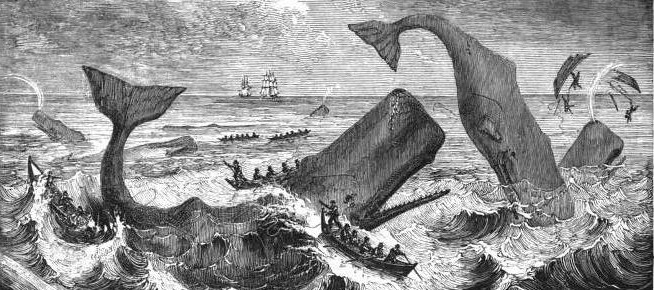
Moby Dick, regarded as the great American Novel, is itself a metaphor today. The narrative we all know: crazy sea captain goes after a white whale. We all know "call me Ishamael". It's like we can't help but think about this American tale whenever we're face to face with narrowly focused ambition or obsession. Moby Dick is the objectified stand in for American values in times of intense, single minded focus. We might invoke the title when talking about athletes, or any competition for that matter. As we chase this giant thing, this life accomplishment, we do so intensely and, though we fail as Ahab does (you can't tell me you didn't know that), all glory is in the chase. It is truly American to try your whole life to accomplish one thing with fierce dedication. But for the most part, I find this "reading" of the book a damn shame.

That is to say, this is more of a cultural feeling towards the book than an actual contextual argument of what happens. The sentiment is annoying too; we can say all these great things about Moby Dick but at the end of the day not nearly enough people are going to read it. It's silly to think we're going to apply all these feeling of ambition we have no problem referencing in our own work and lives to actually pick up the book and literally suffer through it. Because that's what you would do; suffer. If you love language and poetry, dense philosophical reveries that go nowhere, then you might be able to get through the heartier sections, but it isn't as though you can blow through Moby Dick in a day, your mind can only actively read for so long. And you absolutely have to  be active, you'll fizzle out in the middle of a chapter about paintings of whales if you aren't. I'm not trying to make anyone feel bad or look down from a high horse either, I'd be lying if I said I never got distracted or that I was 100% present in every chapter. There are entire sections of chapters I know I missed and could potentially be forever lost on me. My point is this is hard, it is a hard book to read. But it is also worth it, which makes its reputation as a difficult but important book immensely frustrating. Why? Because Moby Dick is essentially all about getting out in the world and discovering the truth for yourself. Allowing this book's reputation as difficult and your preconceived notions about its themes stop you from reading it, is a crime against literature.

Here is something you might not know about Moby Dick; it is not about the Whale. There is a reason only small portions of this book are related to plot and why the massive chunks in-between seem to be about inconsequential things. That's because Ahab's hunt for the whale and Ishmael's hunt for the truth are practically one in the same; they are both "striking through the mask" as Ahab would say. The whale is not some allegory for God or a penis or something, Ahab is hunting him to escape his own Allegory of the Cave (Plato is the most present, but you'll find Locke, Hume, Kant, Epicurus, Aristotle, fucking everyone). When the white whale took Ahab's leg he "identified in him not only all of his bodily woes, but his intellectual and spiritual exasperation". To Ahab, Moby Dick is not just a shadow on the wall, but the wall itself. Ahab seeks to destroy the wall and find the truth behind the object at hand, perhaps even proving that it was indeed just a big whale and nothing more. Ishmael is less concerned with one single thing as he is with things like the whaling industry, the anatomy of a whale, bowls of soup, pieces of wood...etc etc. While Ahab's is a "monomaniac" quest in that he heaps all possible truth behind one single object, Ishmael seeks to find all possible truth behind every object. He is always butting heads with naturalists, academics, and  those dedicated to the study of the physical world. Which means he is often wrong scientifically or factually (he calls a whale a fish for example). This is because Ishmael is not concerned with the accuracy of physical truth, but of the truth way down behind everything. Ahab is not concerned with the physical whale but the truth heaped on his hump (Ahab's words, not mine).

In short, the book is about ambition, but it is more an invitation to look beyond the physical world. Melville's ability to take the seemingly mundane object - a bowl of chowder, a rope, whale guts - and blow them up to philosophical proportions is the most inspiring thing about Moby Dick. The reason you should force yourself to read this violent, drawn out, and dense book is exactly because that is what the book teaches you to do. If you're not actively forcing yourself in pursuit of truth despite the difficulties and perils that come with such a journey, then you aren't truly living in reality. Who knows, forcing yourself to read Moby Dick could be the start of a more fulfilling life, but you won't know until you try.

**Quick aside: The final fight scene between Moby Dick and the Pequod's crew is like the most fun I've ever had reading. A three chapter long battle in which MD kicks some serious ass....


Monday, November 16, 2015

A ReRead of The Stranger by Albert Camus


Rereading the Stranger by Camus, it is obvious that America has hijacked Existentialism and any subsequent narratives. I see the philosophy and the narrative of the Stranger everywhere now. I watched Clerks the other day and saw countless parallels between Mersault and Dante; when describing the book to a friend who has never read it I gave into the temptation of comparing pre-existential crisis Mersault to pre-Brad Pitt Edward Norten in Fight Club; the internet is full of listicles prompting readers to live life to the fullest and not to let traditional, societal expectations prevent us from doing what we want. This all seems really existential, but I think there is something fundamentally wrong, though it is hard to put my finger on exactly what.

It seems that Hollywood and the internet respectively enjoy stoking the idea that we can't live passive lives. But their portrayal of it is missing something fundamental, something the stranger demonstrates in abundance. To Hollywood and career internet motivators, pre-existential crisis characters are boring and monotonous (think Norton's condo in Fight Club), that they are letting some triviality get in their way. They live totally unappealing lives and are usually foiled by existentially and unrealistically laid back, cooler people (Pitt from Fight Club or Randall from Clerks). On the surface, what makes this life so desirable is that it is liberating; you're free of the fetters of societal expectations. As though by removing crushing expectations we are somehow going to live happier. This all jives pretty well with existentialism, but the portrayal of what it means to live a wholesome life is still far too selfish. This idea that American mediums are spouting is still operating under the assumption that all of this is for the individual, a very American concept. Every insistence that you follow your dreams or forget what others are saying are all perpetuating, not the idea that you have to be an active participant in life, but that life is somehow meant for you.

Think about pre-existential crisis Mersualt, what makes his life so undesirable to me is his selfishness. Whether he's at his mother's funeral, hanging out with friends or loved ones, or just existing in the public, he is constantly bitching about people in his way. Not in his way like they're preventing him from following his dreams and ambitions, but in his way like their existence is preventing his existence from dragging him to his inevitable end. Or just preventing him from taking a nap and having a cigarette. In every moment Mersault is aggravatingly thinking only of his needs, of his fatigue, how uncomfortable he is, how disgusting other people are and how they are making him feel unpleasant. He lays out in great detail how pathetic is mother's old (new?) fiance looks trying to keep up with her funeral procession and how much it bothered him. The unnamed Arab man he kills (that the man is unnamed is case in point really) is preventing him from going to a shady place while he is caught in the sun. Mersault's passive life is passive because he is unthinking, because he is operating in a default setting that assumes his life is the most important one. After his existential crisis, he thinks only of others and hopes they come out to cheer his death in ecstasy. It's not like he lives a really sexy and desirable life after his revelation, he doesn't get to relive his life the way he sees fit and follows his dreams, he dies. What makes Mersault existential is not his new life in contrast to his old one, but rather his new thinking.

That's the tragedy to me; I know people who live incredibly vibrant and exciting lives that still fall in the same pitfalls Mersault falls into. That there is a sort of anti-selfishness in Existentialism that maybe entrepreneurial/capitalist America doesn't want to acknowledge. That living life as an active participant, not passive, means actively considering your life is no more important than the lives around you. Living actively, existentially, has nothing to do with people getting in your way and everything to do with your acceptance that they are there and so are you and no one is any more important than anyone.  The second you attribute meaning and purpose to your life, the way American pop culture is always portraying as the only way to a fulfilling life, is the exact moment that you are living passively, taking the easy way out. It could be that Existentialism has nothing to do with living and everything to do with how you think, it is after all a philosophy.

**Read the Stranger, if you've already read it, reread it. I picked it up and a week later France gets attacked by terrorists and over a hundred of their citizens are tragically killed. They are attacked by a group of people who believe their life's purpose trumps another's. I picked it up right when protesters in Missouri with legitimate complaints of racism are considered detrimental to an individual's freedom of speech. I read this at a time where it is considered critical and intelligent thinking to assume the worst of people, to accuse those in poverty of gaming the system because of your taxes, when it is in fact the easiest possible way of thinking. Today we are plagued by those who consider their life the most important and meaningful, our country's values and pop culture are encouraging us to believe this. The Stranger is a reminder that this is man's default way of thinking and only by actively rebelling against this notion can we truly transcend.**