Thursday, June 30, 2022

Here and No Further

While I am not a lifelong activist I’ve probably been around protests more than an average person. I have led protests and attended as a participant, I have been a liaison to the police and I have actively avoided them, I have planned protests and been a part of vehement strategy debates.

In every event, there will inevitably be a suggestion we engage in some mild level of violence. Never anything physically harmful to a human body of course, but when I led a protest against the offices of Blue Cross Blue Shield in Lansing someone suggested throwing a brick through the window, and another suggested damaging the front door to allow us inside. When I attended planning meetings for a Green New Deal protest outside of Detroit’s Auto-show Prom in response to GM’s layoffs some suggested we storm the doors, break things, and sabotage cars.

These were always a minority of voices and they were always roundly rejected. Most argue that violence is not an effective tool for protest and even if it is in the short term (IE it could get you thru a locked door), it is morally wrong and damages long-term movement building.

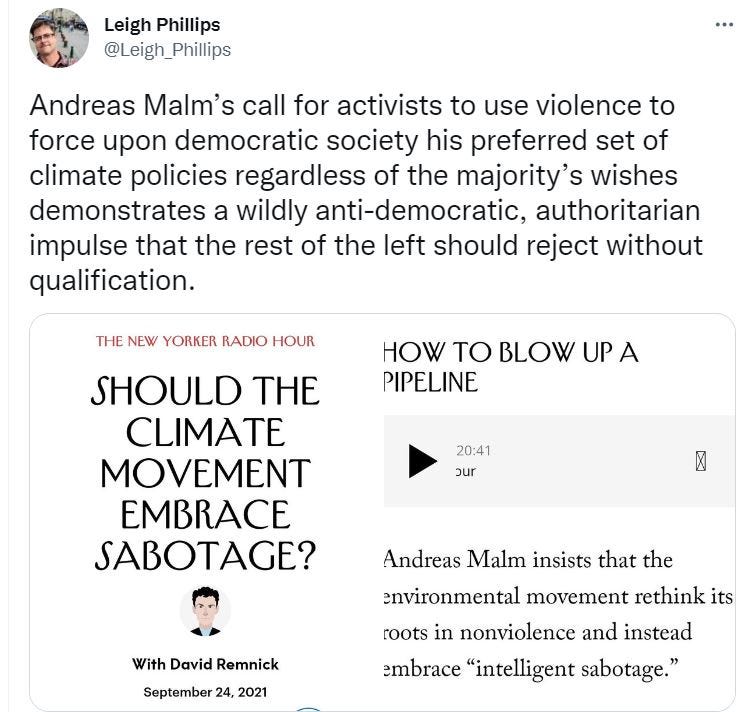
Andreas Malm seeks to turn these arguments completely on their head in his book How to Blow Up a Pipeline. Which is sort of an odd title since Malm doesn’t really offer any complex instructions about how to sabotage a pipeline, but instead takes the pacifist hard-liners in the environmental movement to task. The book would be more aptly called “Why to Blow Up a Pipeline”

To Malm, our hands are forced, we’re in self-defense mode as humans who inhabit this earth. How to Blow Up a Pipeline centers on three distinct arguments: the first is a rejection that the success of non-violent movements in the past suggests they should serve as our singular strategy in the present, the second is an argument for why widespread destruction and sabotage of private fossil-fuel property is necessarily strategic and ethical, and finally, there is a concise argument for why apathetic despair is the true movement damaging mantra.
We Love MLK, Don’t We Folks?

The first section of How to Blow Up a Pipeline is dedicated to Malm’s complete rejection of pacifism as an exclusive tactic. Realizing the bulk of the argument for non-violent resistance comes from lessons taken from successful movements of the past, Malm spends much of this section breaking these historic moments down into the sum of their more complicated parts.

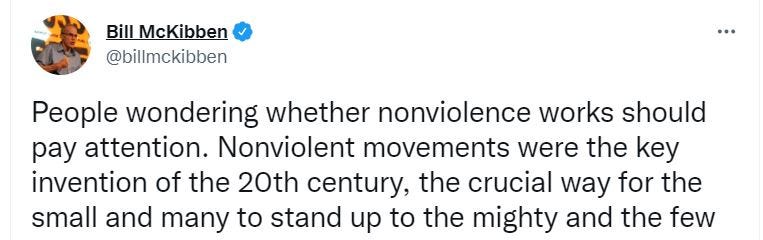
Backing up a bit, Malm’s main complaint is with climate activist veterans such as Bill McKibbon whose admiral civil disobedience activities take non-violence as a mission statement. Explicitly calling on inspiration from past movements like abolition, the enfranchisement of women, and the civil rights movement these activists believe non-violence is both a “spiritual insight” and strategic in that they believe “violence committed by social movements always takes them further than their goal”.
Malm’s point that reactionary violence was a very real and very effective tool for social change rings true even with just a cursory glance at the history. The abolition of slavery is a perfect example; “slavery was not abolished by conscientious white people gently disassembling from the institution…As some recall, slavery in the US was terminated by a civil war, whose death toll still remains close to the aggregate from all other military conflicts the country has been embroiled in”. By this measure, it would seem bizarre for hardline pacifists to claim this historic moment as a win for their tactic. It would be like claiming Hitler was defeated by pacifism by ignoring the entirety of military action in WWII.

A lesser-known history is the women’s suffrage movement. Quoting extensively from historians like Diane Atkinson and her book Rise Up, Women! Malm points out that reactionary violence was so drastic it’s hard to imagine it didn’t play a role in enfranchisement; “suffragettes forcing the prime minister out of his car and dousing him with pepper, hurling a stone at the fanlight above Winston Churchill’s door, setting upon statues and paintings with hammers and axes, planting bombs on sites along the routes of royal visits, fighting policemen with staves, charging against hostile politicians with dogwhips, breaking the windows in prison cells. Such deeds went hand in hand with mass mobilization.”

Of course, the real crux of any pacifist argument is going to stem from the civil rights movement of the 1950s, 60s, and 70s. Malm acknowledges the successful non-violent strategies of the time as “the better case”. Far from being put in the corner, this is where Malm develops his actionable thesis; that singular strategy enforcement is the problem and constructively violent wings of the movement shouldn’t be condemned.

The theory drawn up is one that comes from analysis of the civil rights movement. “Radical Flank theory”, coined in the book Black Radicals and the Civil Rights Mainstream by Herbert H Haines, points out that radicalism and violence when accompanying non-violent resistance to systemic violence is more effective than either strategy on its own. As Malm puts it; “the civil rights movement won the act of 1964 because it had a radical flank that made it appear as a lesser evil in the eyes of state power”.

There were hundreds of violent riots in the late 60s, many of which leveled entire city blocks. The risk of this widespread devastation to property and human well-being was precisely what bolstered the voices of the many nonviolent protesters, quoting Haines directly; “nonviolent direct action struck at the heart of powerful political interests because it could easily turn to violence”. The double pincer of reactionary violence and strategic nonviolence is put forward as the reason for the success of the civil rights movement.

Malm concludes that “Non-Violent civil disobedience caught on because it worked - better than the alternatives, such as guerilla warfare against the state - and was appreciated precisely as a tactic, rather than as a creed or a doctrine”. After concluding that the true lesson of history is an uncomfortable embrace of violent resistance as a possibility if not at times a preferred method, Malm is ready to make his case for what to do in the face of planetary destruction.

Kill Your Local Oil Baron(‘s Stuff)

Before the second argument comes in full swing, Malm reiterates; “non-violent mass mobilization should (where possible) be the first resort, militant action the last; and no movement should voluntarily suspend the former, only give it appendages”

At long last, Malm lays out what exactly he thinks the climate movement should do:

“so here is what this movement of millions should do for a start: announce and enforce the prohibition [of new C02 emissions]. Damage and destroy new C02 emitting devices. Put them out of commission, pick them apart, demolish them, burn them, blow them up. Let the capitalists who keep on investing in the fire know that their properties will be trashed…if we can’t get a prohibition, we can impose a defacto one with our bodies and any other means necessary.”

Essentially Malm calls for widespread private property destruction, sabotage, and physical prevention of extraction. Some might argue that property destruction is not violence, but because many in the climate movement believe it to be, Malm proudly adopts the description.

This is the most controversial aspect of Malm’s work and has gotten him a lot of heat from various pundits. While the first section deals with any arguments suggesting the strategy of violence itself has always been ineffective, the second section fields arguments against the deluge of comments that claim what Malm is suggesting is immoral.
Yet Malm treats violence towards fossil fuel extraction or carbon burning property as a complex rule for self-defense. If the property was a person and was doing the same level of harm to your person and life, violent action would surely be morally justified. Since the entire planet, atmosphere, and biosphere belong to all of us, this property is in fact doing damage to, not just our personal but our life-sustaining property and we are within our right to react accordingly.

Drawing the distinction from killing - which Malm is swift to say is never justifiable as a tactic - How to Blow Up a Pipeline puts property violence on the following gradient; “one type of property destruction that approaches killing and maiming, [is] that which hits material conditions for subsistence like poisoning someone’s groundwater for drinking…at the other end of the spectrum is the blasting of a superyacht into smithereens”. Taking this logical approach means we are being killed by the owners of private property and are being chastised for damaging that property.

Imagine being shot and before the shooter can finish you off you grab the gun and destroy it. The charge leveled at you however is that you damaged the personal property of another and therefore acted immorally.

Still, violence is only justifiable, it is not always the best tactic, as Malm states over and over again. Yet there are constantly charges of violence being leveled at activists doing the property destruction, even at Malm himself for inspiring it. The charges come from all around, the property owners themselves, the brokers of the status quo like industry figures or media pundits, and even from other environmentalists in the movement.

This anger is hard to reconcile considering the scope of harm that the property itself is doing. We’re not talking about breaking the windows of a local bookstore or fire-bombing a progressive church, we’re talking about sabotaging pipelines, decommissioning coal mines, and preventing construction equipment from deforestation among other things. If we’re forced to go through the mental gymnastics of considering the property damage as violence worthy of condemnation, surely the violence the property was engaged in is far more deserving of our action.

In addition, if we as a society are truly concerned with the violence that How to Blow Up a Pipeline could be instigating, our best bet is to rapidly adopt climate and environmental policies that prevent fossil fuel and carbon-emitting property from doing much if any damage. Radical Flank Theory at work.
Never Give Up, Never Surrender!

If Malm believes there is a detrimental stance the climate movement can take its apathy. The idea expressed by modern literary figures like Jonathan Franzen is that the damage is done so we should just clutch our loved ones. Malm also seems to put those who criticize the violence of the radical flank in this same bucket.

If strategic pacifists argue that we’re not at the point where widespread sabotage is warranted, they’re really no different than the fatalist who claims the damage is done and activism is useless. To Malm' “Fatalism of the present holds defeated struggles of the past in contempt, and so does strategic pacifism: if someone raised a weapon and lost, it was because she raised that weapon…In the universe of strategic pacifism, only the winners deserve praise”.

So while the hardline pacifists of the movement claim, with some validity, that violence does damage to the movement as a whole, Malm would argue that this unpopularity can be weaponized rather than allowed to turn the movement into something the public despises.

Malm understands that violence is not for everyone and even seems to relent that the majority of the climate movement will not necessarily participate in hostile engagements with law enforcement. However, should the activities of the radical flank arouse public condemnation, the strategy is for the less radical, bureaucratic arm of the movement to leverage the moment for systemic change.

This is where Malm seems to lose the thread. There is no question that violence, even if we can make an air-tight case for its heroic justification, is going to draw criticism and unpopularity towards the movement. Charges of terrorism have been leveled at eco-activists engaged in this work before and we must never forget that the government has a powerful War on Terror propaganda apparatus that can quickly be adapted (something Malm seems to forget as much of his movement focus is out in Europe where beat cops aren’t even armed). Malm is correct to justify violence against property destroying the earth, but the inspirational and/or deleterious effects on the movement are impossible to determine.

Even if you’re not going to drop your protest sign in favor of a monkey wrench, even if the idea of destroying something that isn’t yours, even something that is itself incredibly destructive and destroying everything you love, there is no disagreeing with Malm that the fight matters and we all need to be engaged in it somewhere:

“The alpha and omega of the science of the cumulative character of climate change run contrary to the axioms of fatalism. Every gigaton matters, every single plant and terminal and pipeline and SUV and superyacht makes a difference to the aggregate damage done.”
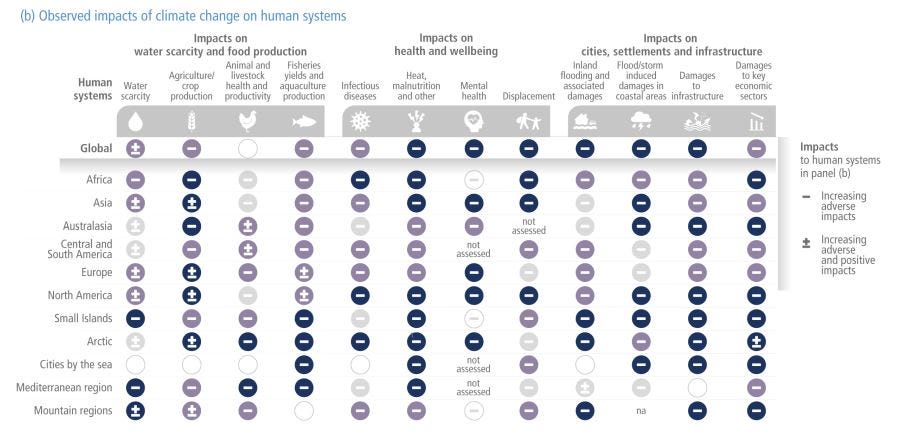
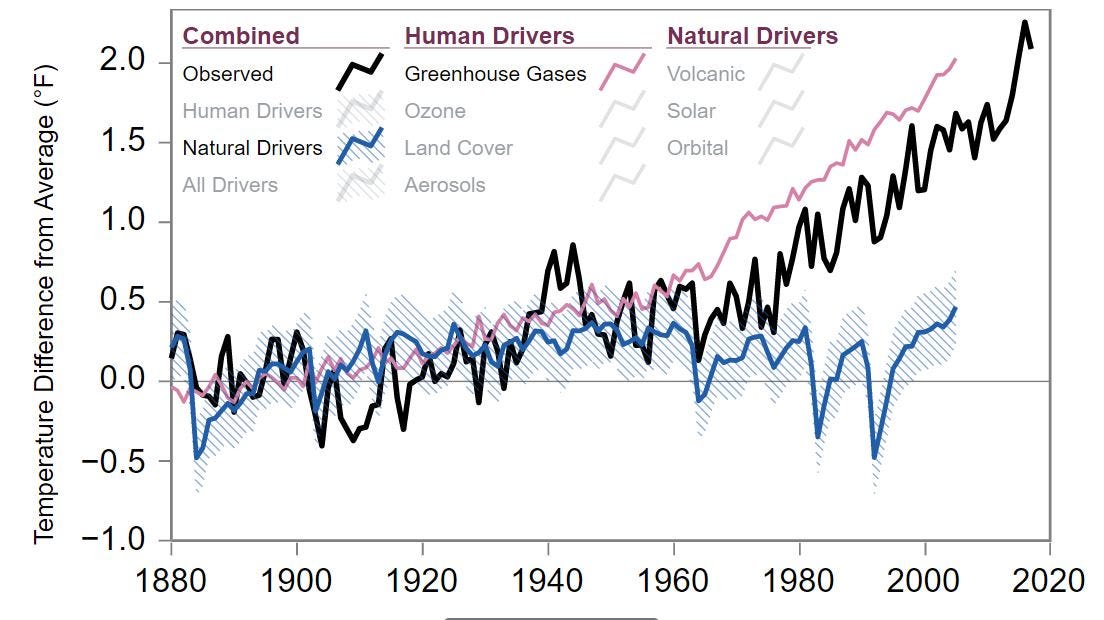
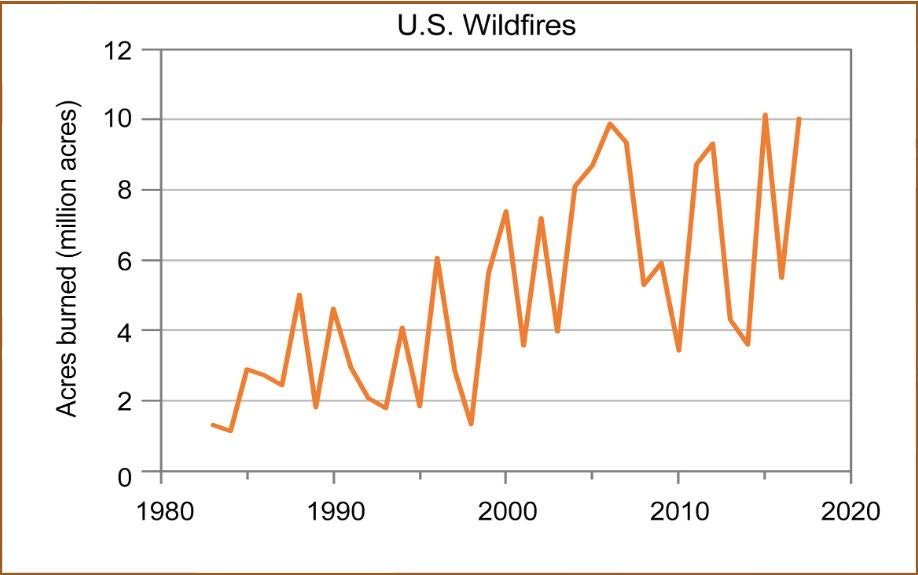
*All images from the 6th IPCC Report and the 4th National Climate Assessment 

Thursday, June 2, 2022

We Live in a Shithole Country


Matt Yglesias is often at the forefront of discourse as it's put forward by pundits. He is somewhat respected as a liberal contrarian with opinions that - whether you agree with them or not - do represent a general consensus amongst other liberals in power. He's also an asshole. 

I follow Yglesias on Twitter because his opinions can be used as a guidepost in semi-useful ways. When I was writing about the Defund the Police movement and Alex Vitale's book "The End of Policing", I used Matt Yglesias' defining article on the issue - in which he scorches the idea for its lack of popularity and political pragmatism - to frame a lot of my arguments. 

It was truly shocking to see his tweet the other day, the day in which 18 **school children** were gunned down in Texas, which ultimately defended the United States as The Place to Be in spite of its problems. Even setting aside the fact that the message is so poorly timed it borders on evil, it's not hard to point out the myriad of ways this sentiment, though obviously not an uncommon one, is wrong. 

Yglesias was likely seizing on the deluge of Tweets and commentary all extolling some version of "This Is America" or "this is a uniquely American Problem" or "This was entirely predictable here in America". He ultimately decided that everyone using this unimaginable tragedy to discuss the regularity of such tragedies in our country was illogical and it was important to set the record straight.

To Yglesias, the USA is a good country. Why? Two main reasons; some elusive measure of all of human history (life expectancy maybe?) and the fact that people around the world want to live here. 

Both of these clauses make for a favorite rhetorical move for pundits in the Take Factory. Simply take a couple of objectively true statements like higher quality of life measurements or the fact that some immigrants want to live here and then extrapolate a premise that doesn't necessarily stem from the true statements: America is therefore good and we should avoid criticizing it as a bad place where uniquely bad things happen.

Yet even the apparently true statements Yglesias banners around have some problems. Consider the "all of human history" comment. This could very well be true, Modern America is certainly a better place to live than 14th century Spain by any metric. The question is why this is important to bring up. Measuring quality of life based on how someone might have lived in the past isn't useful because that person could never exist in the past. The true measure would be how many people are living the best possible life now, which means considering the lives of people relative to the lives of other people who exist. 

Two great examples of this are mass shootings and the uninsured. It's preposterous to look at someone who is uninsured or the victim of a masshooting and tell them that if they existed in in another time period they would be more likely to be uninsured or killed. Imagine telling an uninsured person that insurance didn't even exist in the 1920s so they should be thankful it's at least a possibility! The real point to understand is that there are people all over he world that do not suffer these things because they do not have the problems that America has. You could take school children or working adults with identical conditions in America and put them in other countries and they would not suffer the same issues they suffer here.

So "anywhere in human history" is an irrelevant and unnecessary measuring stick. But to be fair, Yglesias also brings in the more relevant point when he says "all over the world". We're unsure what he's referring to as he doesn't mention any particular metric. He would be incorrect if he were referring to a whole host of things from gun violence, to paid maternity leave and the maternal mortality rate, to the rate of uninsured and outcomes in healthcare, to the number of incarcerated citizens etc etc where the US lags behind many, many other countries.

Yet people do clamor to move here! Of course no one cites our mass shooting or terrible healthcare outcomes as they reason why, generally they're moving here for "opportunity". This can mean different things for different people, opportunity for wealthy Northern/Western countries could be harder to pinpoint than countries in the so-called "global south" whose residents who want to move here are looking for a better life. 

For the former, it's not likely our lack of free university education or dwindling public education institutions, it isn't likely our for-profit health financing industry, it's not our affordable housing, it's not our lack of violence and public safety. It's most likely because of their employment or because they married an American citizen spouse. Which there is of course nothing wrong with, but one would hardly call a country the best place to live because it has interesting places to work and Europeans find the love of their lives here.

The latter portion of people who want to live in the US are coming from countries that do not have the same material conditions or rights. Yet this seems a strange metric as well since someone's desire to move to a place with better material conditions or freedom should not logically matter when the best material conditions and rights aren't delivered. The US has treated people who want to come to this country - people from countries like Haiti or El Salvador - with flagrant abuse. Those that come here to work - legally or not - remain one of the most exploitated labor forces in the country. What's worse, many of the countries where people are fleeing totalitarianism or poor standards of living have those things because of an active or passive role the US played. Even countries like India or China where people come to work in tech on H1B visas for better pay still have to enter a beauracratic hellscape where being forced to uproot isn't uncommon. 

Which is all to say that comparing a life in Modern America to a theoretical life in human history or another part of the world fails to imagine what that life would be like if the US didn't exhibit such a horrible set of unique problems. It's exactly because we can and should imagine an America in which children are not murdered in school that we critize the version we're currently living in where this is a terrifyingly common occurence. 

In short, we should not be measuring someone's life around what that life would look like in the past or in another place on earth, but what that person's life should look like if the society they were in treated them with dignity.

When I heard about this mass shooting in a school hundreds and hundreds of miles away I clutched my daughter close and listened to her heartbeat in a state of pure despair. Amazingly, Matt Yglesias telling telling me Modern America was better than any time period or place I could theoretically exist offered no comfort.  


Tuesday, May 10, 2022

Dune by Frank Herbert


I recently listened to Dune on audiobook after being thoroughly impressed by the movie. The action/thriller sci-fi novel depicts a sort of Gulf War in space. Where oil is the essential commodity here on earth, powering our entire society and forcing unending conflict due to its finite nature, "spice" is the resource at the heart of Dune. It's what makes space travel and cosmic civilization possible, the parallels are uncanny. 

So in some sense, you can almost imagine an obnoxious allegory taking shape; the spice is mined on the desert planet of Arrakis (hard not to hear in all its audiobook glory as pronounced like "Iraq - is"), which is inhabited by a fanatically religious desert people known as Fremen (get it, like Free MEN), who are leveraged against a Soviet Unionesque former hegemony society and ultimately against the very embodiment of imperialism itself; the emperor. 

So...yes, it's the Gulf War in space.

Yet there is a lot to make Dune more interesting than the sum of its borrowed political plot. The action in Dune is truly exhilarating. Action scenes in books have been hard-pressed to excite since movies got extremely good at them. Yet the various fights and battles in Dune don't disappoint. The cast of combatants has a range of often discussed reputations, very Game of Thrones reminiscent, that has any reader looking forward to the eventual clash. 

The other really interesting component of the action in Dune is how all of the fighting is done entirely with knives, not swords; knives. There is zero explanation for why this is the case, but it works. The fighting is intimate and Herbert writes riveting engagements whether they're one on one duels or epic skirmishes between armies. I feel like a kid again writing about this, but it really is fun!

The politics of Dune is also more interesting than the Gulf War it's modeled after and the lesson is far from a contrived regurgitation of the status quo. Protagonist Paul Atreides; a prodigal son trope who eventually leads the Fremen in their "Jihad" (actual word used) against the empire, clearly struggles with waging a holy war and it's not very clear at the end of the novel that he has made the right choice, a quandary the reader is likely to share.

The Fremen are also written in a refreshingly complicated way. Many of their brutal traditions are unforgivable, even as you're forced to acknowledge they're born from a life in an almost uninhabitable, incredibly hostile desert planet. But they also have ecological ambitions, hoping to turn Arrakis into a green planet, which would likely mean an end to spice production. The dynamic political conflict that's ultimately set up is the Fremen raging against the empire's colonial rule, desiring to end their extraction of finite resources so they can reverse the destruction of their planet on one side and Paul on the other trying to harness this power with the reader guessing if he's helping the Fremen, using them for his own revenge, or just accidentally causing untold destruction/bloodshed/end of civilization. 

Herbert works intricately to dismantle the reader's usual reliance on the idea that the protagonist, even a "chosen one", is always right. Imagine if Luke Skywalker's destruction of the Emporer caused inter-planetary economic devastation and unleashed bloodthirsty Ewoks who committed eco-terrorism to protect their forest planet. Imagine if, in Avatar, society could not function without unobtanium, and Sully + the indigenous population of the planet caused cataclysmic destruction by preventing people from mining it. 

This makes Dune a complicated anti-war, ecological-focused novel, one that assures us the victor in any war, whether their cause is to justly protect their lands or greedily prevent societal collapse, is still only the victor of a war. Paul and the Fremen must balance between the liberation of land and resources (especially water, which the Fremon ironically hold in much higher regard than spice) to be used for the good of all people or complete destruction so a few may no longer profit. The message then is that transforming society is a collaborative effort. A thin strain of possibility exists for this outcome in the novel, the reader is certainly hoping for it by the end.


Tuesday, April 19, 2022

The Rock Warrior's Way by Arno Ilgner


A year or so ago I read Training for the Uphill Athlete and learned that it's possible to train your metabolism using exercise. I had originally picked up the book to help improve my endurance, but instead, I learned new levels of training. Since then, I've been looking at other texts on areas I felt were harder to train than just your muscles or lungs. Something I'm sure lots of people can relate to is the mental element in a lot of athletic endeavors, I've often felt hindered in my two favorite activities - mountain biking and rock climbing - by mental obstacles. So I wondered if it was possible to train your mind.

On discussing this with a friend of mine he lent me the Rock Warrior's Way by Arno Ilgner. I was initially skeptical; the title seemed doofy and the concept of a "warrior" is overly fetishized by the self-help grift. Plus there are some nauseating self-help tendencies in the book itself. For example in discussing the power of choice (I mean...come on...) Ilgner drops this gem on us: 

"'I have to work full time,' implies that you have absolutely no choice. In fact, you choose to work. Working produces income for things you've deceied are important, such as food or your children's college tuition. You could also choose to quit work and accept the consequences."

The idea that we have simply decided food was important and not a bodily function to live is comical. The consequence of not working is the inability to afford basic necessities, while Ilgner is technically correct that this represents a choice, basic philosophical concepts tell us it is a false one. I don't want to get too much into the Cake or Death illusion of choice at play here, but rather use this moment to illustrate that Ilgner's book doesn't offer much in the way of philosophical thinking. It's actually filled with the sorts of platitudes that might be heard in the halls of our favorite multi-level marketing schemes.

This likely sounds harsh, but it's only because there are some really good tips on training your mental game in whatever activity you're embarking on and it's unfortunately shrouded in pseudo-philosophical self-help garbage that forces the reader to dig through it. I wouldn't want to recommend the book for its good bits without first warning the reader of the really, really bad parts.

The driving idea behind what Ilgner somewhat erroneously calls being a Rock Warrior (there are approximately zero words dedicated to the conceptual basis of a warrior being to kill others in...you know...war) is that when we're in "the moment" of our chosen sport - on a rock face, dropping into a MTB line, running a race, whatever - our subconscious often takes over our decision-making matrix and if it isn't sufficiently trained to react calmly to potential risk, is unfocused, or more focused on our ego we are going to experience what we often describe as a mental obstacle.

Many athletes don't have this mental obstacle at all, think of renowned free soloist Alex Hannold who has said while climbing the thought of death or failure never once enters his mind. Other athletes might have more trained subconsciousness almost by accident and so their mental obstacles are very small and easily surmountable. Yet a large body of especially hobbyist athletes likely feel significantly hindered by mental obstacles. 

Ilgner's antidote to our subconscious effects on performance is to train our more active thoughts so that when our subconscious takes over it's more likely to respond in the way we've trained our active thoughts. This is how athletes train many other muscles, it's why those who play team sports run plays, the idea is that when you drill something enough times when the moment comes to do it when it counts your body will react reflexively. 

So Ilgner instructs us to "become aware" of our thoughts in our waking life and attempt at every turn to push back on negative thinking, ego-based decision making, and other obstacles forming thought processes. This type of training isn't new - in fact, Ilgner admits himself he's amalgamating other works in the field to be climbing-specific, but the Rock Warrior's way does, at the very least, do a good job couching the language in the context of climbing. 

This is all to say I've put some of Ilgner's tips to practice. There is a lot to be said, especially in gravity sports like MTB, for making your subconscious react less on the basis of fear or ego and more in line with learning and appreciation for the sport. While the biking season isn't in full swing, I have noticed some improvements in my climbing. I have always had a hard time with my local gym's bouldering wall, it's pretty high at 15 ft and every climb is a top-out. Where I used to struggle to top out of even easier problems, since putting some of these techniques into practice I've noticed I have had an easier time at the top and developed more comfortability in falling. 

Do I recommend The Rock Warrior's way? I wouldn't dish the name out as often as I talk about Training for the Uphill Athlete, but I would probably suggest it to a friend who might be explicitly lamenting an issue with mental obstacles. I would do so only with the caveat that there is quite a bit of cheesy trash to sift through.

Tuesday, April 12, 2022

The Woke Mob Under The Bed

Somewhat recently an entire database called Canceled People was launched to document the so-called victims of so-called Cancel Culture - a phenomenon where public (or public-ish) figures are accosted by large, usually online, public bodies calling for their resignation or expulsion from public life. It isn't the first of its kind, but it claims to be bi-partisan and sizable. 

The database includes names like Liz Cheney (allegedly canceled for being critical of Donald Trump) and Donald Trump (whose cancellation was manifested as a permanent Twitter ban), but there are also figures on the left like Cenk Uyger of The Young Turks and Nathan Robinson of Current Affairs. We don't need to focus so much on the database, but more that it represents the latest installation of this trend in the discourse that tries to show the Woke Left to be as censorious and destructive to human life as the Right. The argument is that both sides of the political spectrum fail to value divergent opinions and try to silence them rather than engage critically.

This argument is often seen from the center of the political spectrum, but prominent voices on the left (such as Glenn Greenwald) and right (such as Charlie Kirt or Candace Owens) have also made the argument that the woke left is as authoritarian and censorious as certain elements of the right-wing. However, this comparative analysis is very obviously missing any context about institutional power. This doesn't render it wrong necessarily - people are getting fired or demoted after mobs of people demand it - but without such context, it's hard to take the problem as a major priority in preserving free speech and independent thought.

When we look beyond the culture wars, where it might be common to trade a teacher being fired for teaching CRT with one who does or says something racist, it's obvious that the biggest practitioner of the most concerning effects of "cancellation" is the Economic Right. The Economic Right is a group that might actually hold fairly liberal social views (not necessarily), but also holds and practices economic ideals more aligned with the right-wing of the political spectrum. While the culture wars between the left and right as they pertain to social issues probably do reflect a bipartisan, cancel culture that sees people terminated from their jobs or positions in media, the Economic Right is responsible for more heinous crimes against humanity.

Given the enormous amount of institutional power the economic right wields - be it as direct government officials, wealthy elite, corporate executives, or just sitting directly at the helms of the institutions themselves - the effects of such power are devasting. Unbridled capitalism and the pursuit of markets are clearly destroying the planet at the expense of all of humanity. Wars are waged over the ability to privately hold finite resources, every human causality as a result of such a war should concern our moral sympathies and demand our deepest outrage more than the entirety of college professors fired across all of time. If mobs of socially liberal voices expelling a comedian from their public pedestal disturbs us, mobs of economically ring wing figures overthrowing sovereign leaders, retaliating against union organizers, sending police to brutalize environmental activists, and leveraging mass incarceration for cheap labor should chill us to the bone. Yet such things are rarely given the same moral handwringing as "cancel culture" as we traditionally know it. 

Even when the Economic Right wing of the political spectrum does participate in the sort of petty grievance style "politics" of the more traditional cancel culture, the institutional power being wielded is far greater and the damage far more devastating. Steven Donziger - who is nowhere to be found in the CancledPeople database - is a demonstrative example. After winning a court case against Chevron on behalf of Ecuadorian people whose water source was poisoned by the oil corporation. As what can only be described as retaliation, Chevron partnered with a US judge who was in their pocket and a legal system beholden to corporate power to bring criminal charges against Donzinger for contempt of court, sent him to jail, put him under house arrest, and effectively ruined his life for over a year. The battle is still ongoing and more can be found out about Donzinger here. 

All this is not to say cancel culture isn't real, but to hear the argument that the left and right are equally destructive when wielding power and using their voice is absurd. The economic right, which can be bipartisan in its own right, is far more concerning in its ability to destroy not just oppositional discourse, but oppositional people. If I am expected to concern myself about cancel culture, I am far more worried about institutional power being exercised by corporations and politicians than I am about a large group of people telling a celebrity to "shut up" on Twitter. 


Wednesday, March 30, 2022

Everyone's New Favorite Argument


Once in a while, a transgender athlete competing in a women's sports league will win a major meet or event and everyone gets excited because they get to bust out their new favorite argument; that trans athletes should not be allowed to compete in women's sports and that all athletes must compete in the sports league aligned with the sex they were born. 

 The premise is that being born and developed as a male delivers an unfair physical advantage over cis women athletes and therefore it is unfair for the latter to compete with the former. This is one of those arguments people love to make because all of the facts seem to be overwhelmingly on their side, almost to the point where they believe it's rendered common sense. I have seen the stats and figures for this argument dozens of times; men are on average across multiple athletic events 9 - 12 % better than women for example or the more favored stat citing how male high school track times beat women's times at the national level. 

Logic dictates then that this argument - trans athletes should not be allowed to compete in women's sports and must compete in the league aligned with their sex at birth - has a sound premise backed up by statistical facts. This is a good example of how the statistical possibility of something might render a premise true, but statistical probability means the practical application and ramifications of such an argument isn't useful. 

If you listened to Joe Rogan or Tucker Carlson tell it, the argument is a self-fulfilling prophecy in which we face an epidemic (or will very soon) of trans athletes dominating women's sports leagues, which will of course open the door to the eradication of women's leagues altogether. Even if this is charged as hyperbolic, they believe that even one trans woman beating a cis woman in a sport is deeply unfair. Despite the technical truth of the fact that there is a biological athletic advantage in men over women, both of these resulting ramifications are open to debate.

There is simply not an epidemic of trans women athletes completely dominating women athletes. There are a negligent number of trans athlete champions despite being allowed to compete as trans women for years. There are zero (0) trans women athletes who have never been beaten by a cis woman in their chosen sport/event. Being transgender is actually fairly rare, being a transgender athlete is even rarer than that, and being a transgendered athlete that can compete even at just the collegiate level is rarest of all. One of the trans athlete bans in Utah was vetoed by a Republican governor because there were something like 75 trans athletes out of 100,000 total athletes. While it's possible that a trans athlete could exist in the upper crust of male athletic ability, it isn't likely, and it's far-fetched to suggest this could put the existence of women's sports leagues in any existential danger. 

Yet most proponents of this argument will set aside the likelihood of these problems and declare any instance of a cis woman losing to a trans woman as unfair. The ramifications of such an argument are bizarre. There are lots of cis women who possess a biological advantage from birth, some have increased testosterone levels, others might have greater height or wingspan, broader shoulders or more powerful muscles. A large facet of sports is just losing to people with a biological advantage over you. 

We do not always create different leagues for categorical advantages. We do sometimes, like weight class in combat sports or the para-Olympics for example, but other times we don't; there are no separate running leagues only for Kenyans or professional basketball leagues for short people and tall people. Which is all to say the categories are decided upon for reasons beyond the biological or genetic advantage of competitors; clearly feasibility, team sports dynamics, the range of participant athletic abilities, safety, and even the likelihood of complete categorical dominance play a role. 

This makes our understanding and ultimate decision on sports categories more complicated than those who espouse this argument would like everyone to believe, and it means their argument is far from air-tight. There are certainly good-faith debates to be had especially as it pertains to safety, but the discourse should be a reasoned debate and not an argument in which one side assumes it has complete objective dominance. It also means this should be a decision that sports leagues and the communities they work with make themselves, free of government overreach and legislation that prevents them from coming to a well-reasoned, fair decision.  

Thursday, January 27, 2022

Alex Honnold Must Be Stopped

When I worked at a climbing gym in 2012, we used to do screenings of the Reel Rock film tour. We'd hang a giant screen from the overhanging wall and throw the series up with a projector. I remember the first Reel Rock I ever worked featured an Alex Honnold film Honnold 3.0.

It was a short time after the viral 60 Minutes special featuring his terrifying solo of El Cap and the film fleshed out a lot of those details. Watching the film, one thing was clear: this dude makes soloing look cool as hell. After the screening, no less than half a dozen climbers started immediately trying to solo the slab wall. People were coming into the gym to buy books about free climbing (which of course probably disappointed them) citing Honnold as inspiration. Among the climbing community there exists a meme wherein any time you mention to a non-climber that you climb they immediately ask if you've A) seen the movie Free Solo and B) ever soloed. This is barely a joke. 

This isn't to say that the attractiveness of soloing portrayed in many of the films featuring them is going to necessarily bring in an influx of people to the activity. That free soloing has grown in popularity is a difficult thing to measure. It's not as though there are regular Gallup Poles conducted of the climbing community. 

The argument is instead that there is this attempt to legitimize free soloing as the "next level" in a rapidly commercialized sport. It's getting to the point where, seemingly, climbers are as strong and as good as they're going to get and the sport needs a new height to reach toward. Things like riskiness or sketchiness have long been a new way to push yourself in climbing beyond what everyone else is doing. So the question is whether or not the sport should include free-soloing on a list of legitimate activities that you are in no threat of losing sponsorship over.

The idea is that when feats of strength are no longer capable of producing interesting, often sponsor-worthy content you can also increase what I call the Probability of Death Factor. Every extreme sport has some version of this. Mountain biking has Red Bull Rampage, downriver kayaking has crazy river runs, backcountry downhill sports...exist, heck even backpacking has some treacherous options. All of these sports create a multiplier in the probability of death and for better or worse make the sport more interesting.

People love to point out when defending free soloing that there is already a probability of death factor in climbing, alpinism, base jumping, and other climbing adjacent sports. This creates a necessary ask; what is an acceptable probability of death factor for any given sport? We can certainly agree that a guaranteed probability of death is a no-brainer, this is literally just suicide and no one is landing sponsorships or cool documentaries for this (I hope). 

Free soloing does not have a guaranteed death probability. Marc Leclerc, the featured climber in the movie the Alpinist, died (uh...spoiler alert) not from his solo ascent, but in an avalanche on his rap down, which would have happened had he soloed the whole climb up or not. Other notable soloists have died in rappelling accidents or base jumping accidents. Obviously, Alex Honold and other lesser-known solo climbers are still alive. 

So what makes free soloing any more unacceptable than the other dangerous corners of other extreme sports, or even just...climbing? It's actually pretty simple, it's not whether the activity guarantees death since any successfully completed activity would guarantee you live, it's whether failure does. When you fail in many of these extreme sports - you don't land right, you fall, you fall out of your kayak, you trip, you bail etc - there is a chance you will die, but failure does not necessarily mean death. What we're actually measuring is the death probability factor in failure, which in free soloing is as near to100% as one can get. 

Imagine if every NASCAR crash meant invariable death or if every loser in an MMA fight was killed on the spot. There are very few legitimate sports in which failure means death almost 100% of the time. To be clear a lot more people might watch a sport as a result of this and it may even promote a widespread interest in the less dangerous pursuits, but this only serves to more rapidly increase the profit motive and subsequent participation (and therefore the death) in the activity. This is why the push to legitimize an activity with a 100% death probability rate in failure is irresponsible.

The larger climbing community and - most importantly - the industry sponsors that prop these athletes up should wholly reject this push and move to immediately delegitimize free soloing. Alex Honnold should not have sponsors, no one who regularly does publicized soloing should. We also need to stop making movies glorifying the practice as some sort of spiritual journey that allows socially awkward narcissists to become beloved ambassadors of the sport.