Friday, February 24, 2017

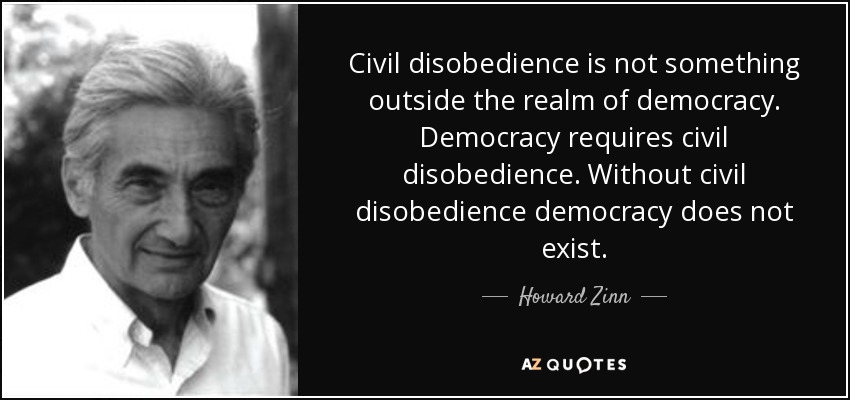
Disobedience and Democracy by Howard Zinn


Disobedience and Democracy is a short essay Howard Zinn wrote in response to a short essay about Law and Order written by a Supreme Court Justice. Zinn outlines nine fallacies in the original essay, quoting extensively enough so that reading it is unnecessary. Each fallacy deals with a more fundamental question on law and order; when, if ever, it is morally permissible to break the law through protest? According to Judge Fortas, the justice who wrote the piece Zinn is eviscerating, the answer is never. Zinn disagrees.

It’s hard not to look at Zinn’s argument as a relic. The moral peril the nation was in at the time of his essay seemed greater than that of today. We’re talking about the Vietnam War, McCarthyism, redlining, and remnants of Jim Crow. So when Zinn states the scope of the civil disobedience in question did not outweigh the immorality of the things they protested, this seems, somehow, truer than today. When Zinn argues that burning your draft card or blocking the road to a chemical weapons manufacturer doesn’t compare to the atrocities of an illegal war, the benefit of hindsight means there are few of us who would disagree as modern readers.

That said, it is important for the modern reader to understand that Zinn’s arguments, at the time, were not widely accepted. That which he advocated the protest of is more comparable to what is happening today than we may be willing to admit while reading argumentative essays of the past. The Vietnam war and the conquests of Indo-Asia/Latin America can strike parallels to the relentless wars in the Middle East today. Surely we can use the same fallacies of law and order when assessing the moral decision demanded of the nation in the case of Edward Snowden, or Standing Rock, or Flint Michigan.

In this regard, Zinn’s words are more relevant than ever. Providing a moral justification and guidebook for disobedience against the state, Disobedience, and Democracy becomes essential reading at a time when democracy is most threatened. While we like to believe we exercise control over our lives by merely participating in democracy, the reality is that we don’t have a say in far too many ways. Americans don’t vote on foreign policy or wars, they don’t decide how much of their taxes go to schools vs corporate subsidies, and with so much corporate spending in elections, they don’t really even elect the leaders that make these decisions. Zinn makes the compelling argument that when democracy becomes an obsolete tool of change, disobedience becomes increasingly necessary.

Whether you’re protesting the state at Standing Rock or the Bundy Ranch, Zinn’s line of questioning will prove invaluable. What do we owe the sanctity of law and what does it owe us? Why must civil disobedience necessarily be non-violent? What are the limits of our government and how do we keep it in check?

If you’re planning to get organized, don’t leave home without your copy.

Monday, February 13, 2017

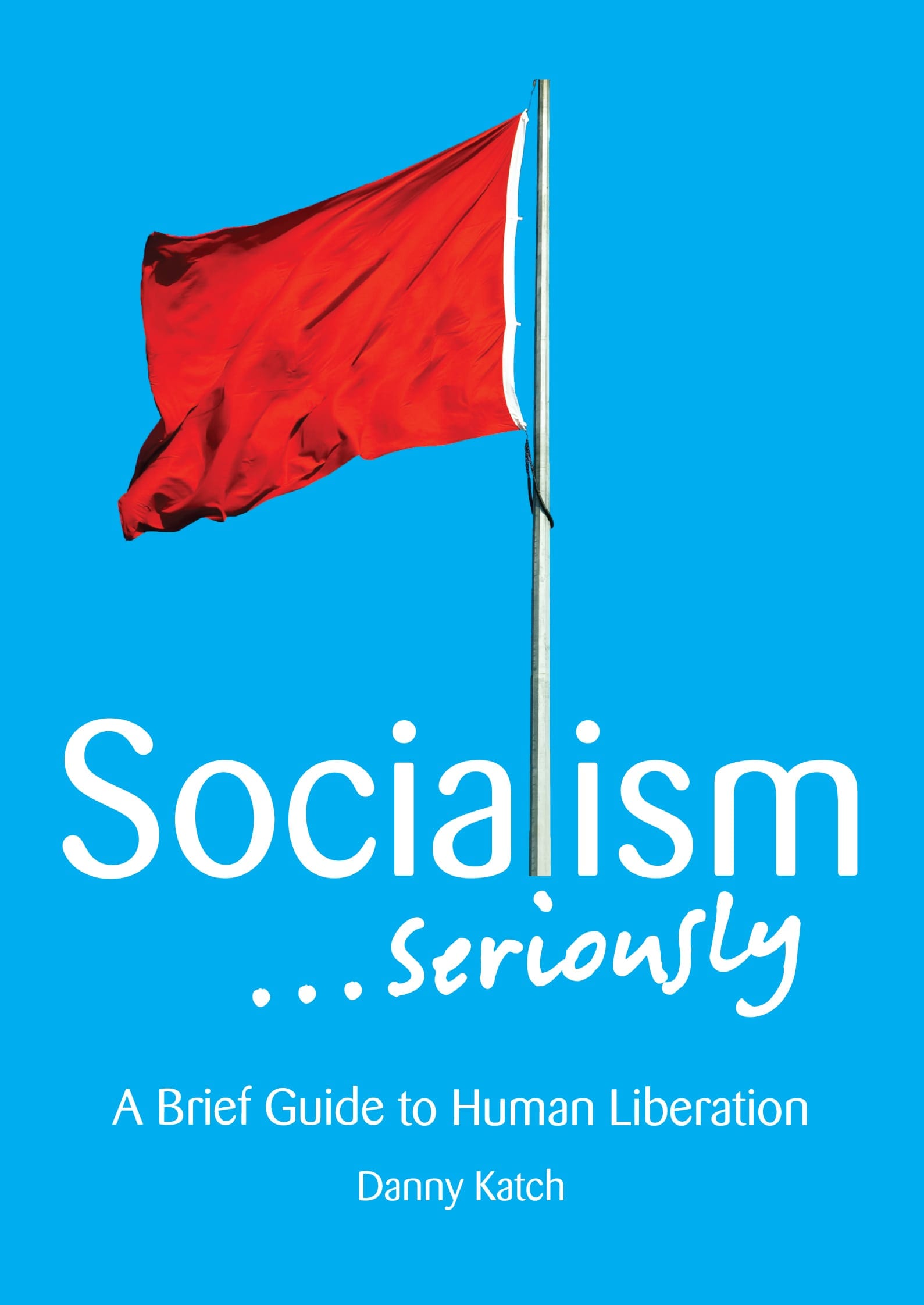
Socialism...Seriously by Danny Katch


Being from the Midwest, I think the ascendancy and eventual victory of Donald Trump came as less of a surprise to me than many people on the coasts. Michigan was an absolutely essential victory for the Donald and he carried it exactly the way I predicted he would; losing the wealthiest/most diverse counties and sweeping everything else.

I called this victory in Michigan, not from luck, but because this is exactly how Sanders took the win from Clinton in the primaries. Almost county by county. Clinton’s loss in the Mitten speaks volumes about the limitations of Democrats, but this is a book review on a short book, so I’ll keep it short.

So many who consider themselves left leaning value the world the Democratic Party claims it fights for. We care about the environment, economic empowerment, minimum wage increases, ending poverty and war. There is a lot of speculation why the rest of the nation isn’t on board with the Democrats despite their supposed dedication to the causes listed above. These explanations range from racism to stupidity, to brainwashing and corruption. While these could all be a little right, they don’t explain the limitations of the Democratic Party.

Think about the inadequate responses environmentalists have when talking about the jobs that are lost when coal plants are shut down, or of labor activists when advocating the minimum wage, or of democrats advancing agendas of Global Trade when auto jobs are shipped to Mexico.

Even Bernie Sanders, considered the furthest left of the party, gives some wildly inadequate answers to perfectly understandable questions. Just the other day when he was debating Ted Cruz (of all people) about health care on CNN; he was posed with questions from a business owner about their inability to afford the ACA provisions enforced on their business. Sanders’ answer pretty much amounted to “sorry, but you have to offer insurance, if you can’t, go out of business”. That is a nightmare answer for small business owners and probably the reason why so many of them hate the government.

So, why can’t the Democrats answer these questions? Because they are all operating under the assumption that their ideal world - the one devoid of war and poverty and injustice - can be achieved under capitalism. But capitalism doesn’t account for the jobs of coal miners when plants are shut down, or of minimum wage employees, or the sustainability of a salon in Texas that offers health care.

Enter Socialism...Seriously by Danny Katch. A short introduction to Trotsky inspired Socialism via humor and laymen terms. There are a lot of working parts in the book, Katch is asking his readers to imagine a world that isn’t structured by capital or profit, driven by a purer democracy than we have today, and all while debunking some of the major criticisms hurled at the ideology.

At times it seems like Katch has the answers Democrats lack. For example, in a world that doesn’t conform to the rules of “profit first”, full employment and environmentalism seem more compatible. When you really consider that we have to sell our labor to survive (something Katch goes into in perhaps his strongest section of the book; Freedom isn’t Free) suddenly it makes sense that coal miners and auto-workers and displaced lumber workers banded together in Michigan to elect Donald Trump. They see Clinton and the left as job cutters, destroyers of livelihood. There isn’t much indication that they are wrong either, Obama himself admitted that coal refinery workers might hate him for legitimate reasons. When Donald Trump enters that scene promising to bring back lost jobs and protect future ones he makes sense to people who have no choice but to work for a living. Katch is offering a vision of a world in which you don’t lack basic needs or a job just because society decided to automate truck driving.

This short, airtight book is a great one to share. Even if those you give it to aren’t going to run out and buy a copy of the Communist Manifesto, it still offers succinct and radical criticisms of capitalism and government, essential for anyone who is interested in answers beyond the standard liberal talking points.

Where Socialism...Seriously deludes itself is not in the ideology or implementation, but rather its perceived accessibility. I don’t find Katch very funny, his humor parades as edgy but is actual banal and overly safe. One wonders if he favored a poppy, referential humor over a more biting one for fear of isolating readers or if that is just his sense of humor. Either way, it is easy to imagine this sense of humor pissing off actual laborers. Then there are some passages about religion toward the end that seem rushed and incoherent, after a few sections of savage capitalism take-downs the section titled “Is Socialism a Religion?” seems like it’s attempting to win over an abundance of people who associate Socialism with Atheism, which isn’t to say those people exist, but rather that they would never read this book.

Which really speaks to another limitation on the left. This book is great to share with liberal friends and family, or maybe people who don’t consider themselves very political but voice concerns about social justice and human decency. Yet even after all the imagining of a socialist America, this book got me to do, it still couldn’t get me to imagine a Trump voting machinist in Up-North Michigan reading it, let alone being convinced of anything it has to offer.


Sunday, January 29, 2017

Both Flesh and Not by David Foster Wallace


This collection could probably more accurately be called “David Foster Wallace Writes About Things”. It is truly for the die-hard fan who can’t read enough DFW and has resorted to looking at pictures of old books he took notes in and restaurant napkins with scribbles on them. They may have even sunk to watching/reading “Though of Course You End Up Finding Yourself”. The desperation in Wallace’s readers that make publishing this collection so lucrative is a testament to DFW as a writer, but none of the pieces here are Wallace’s best. In fact, they are far from. Which is to say, they are still good. Many are fun, some are arduous and academic, one is absolutely terrible, and they all cover a range of topics that keep the casual non-fiction reader on their toes. If you’re at the point in your career as a David Foster Wallace reader when you find you absolutely need to read something new, pick up “Both Flesh and Not”. If you’ve yet to read his entire collection, save this one for later.

Also, as a sort of side note, I could not have read the last essay of this collection at a better time (“Just Asking” pub. The Atlantic). Trump recently made the truly unAmerican decision to ban immigrants/refugees from certain countries with predominantly Muslim faith. The essay is very short and worth quoting in its entirety at such a time:

“Are some things still worth dying for? Is the American idea one such thing? Are you up for a thought experiment? What if we chose to regard the 2,973 innocents killed in the atrocities of 9/11 not as victims but as democratic martyrs, “sacrifices on the altar of freedom”? (Lincoln) In other words, what if we decided that a certain baseline vulnerability to terrorism is part of the price of the American idea? And, thus, that ours is a generation of Americans called to make great sacrifices in order to preserve our democratic way of life—sacrifices not just of our soldiers and money but of our personal safety and comfort?

In still other words, what if we chose to accept the fact that every few years, despite all reasonable precautions, some hundreds or thousands of us may die in the sort of ghastly terrorist attack that a democratic republic cannot 100-percent protect itself from without subverting the very principles that make it worth protecting?

Is this thought experiment monstrous? Would it be monstrous to refer to the 40,000-plus domestic highway deaths we accept each year because the mobility and autonomy of the car are evidently worth that high price? Is monstrousness why no serious public figure now will speak of the delusory trade-off of liberty for safety that Ben Franklin warned about more than 200 years ago? What exactly has changed between Franklin’s time and ours? Why now can we not have a serious national conversation about sacrifice, the inevitability of sacrifice—either of (a) some portion of safety or (b) some portion of the rights and protections that make the American idea so incalculably precious?

In the absence of such a conversation, can we trust our elected leaders to value and protect the American idea as they act to secure the homeland? What are the effects on the American idea of Guantánamo, Abu Ghraib, PATRIOT Acts I and II, warrantless surveillance, Executive Order 13233, corporate contractors performing military functions, the Military Commissions Act, NSPD 51, etc., etc.? Assume for a moment that some of these measures really have helped make our persons and property safer—are they worth it? Where and when was the public debate on whether they’re worth it? Was there no such debate because we’re not capable of having or demanding one? Why not? Have we actually become so selfish and scared that we don’t even want to consider whether some things trump safety? What kind of future does that augur?”


Friday, December 30, 2016

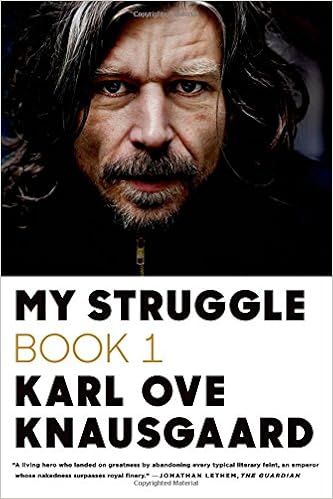
My Struggle by Karl Ove Knausgaard


Karl Ove Knausgaard delivers a long, meticulous, and surprisingly enthralling read in his autobiographical series My Struggle. Part 1 opens with some fun reveries on death and dying before launching into tales of Kanusgaard’s childhood. These are a series of somehow (assuming you’re a white male) relatable stories that range from elementary school to early college. There are a lot of things in these passages for people to enjoy; the painful attempts at starting a band in middle school, the pathetic attempts at fitting in and the misguided importance placed on doing so, the looming presence of a stern father and the growing resentment that follows. Many of us have gone through at least some of these things and, for reasons I cannot really explain, there is a tremendous amount of pleasure to be found in reading them recounted in extreme detail.

This is where My Struggle begins to dwell in the realm of fiction. It isn’t just an autobiography, what makes it a fictional account lies in the story’s minutia. Knausgaard doesn’t rely on charged drama or even all that much human interaction to carry the action of his fiction. What he decides to embellish are the details. This doesn’t require a killer memory and surreal perception skills like one might think. The real skill employed here is imagination. There is no real way of telling whether Knausgaard can really tell what embarrassment felt like, the color of things, the texture, whether he sneezed and at what moment in the conversation. I know I can’t recall many of these things in my own life, but nor could I necessarily imagine myself doing so. That could be because I don’t have the range of imagination Knausgaard allows himself to employ in the retelling. Dwelling with him in these past moments though, is cathartic and rewarding. As a reader I don’t know if I’ve ever really been anywhere like this in a book, even the most detailed fiction leaves out what Knausgaard so essentially and effortlessly captures.

The second half of part one takes a darker turn as Knausgaard comes face to face with a tragedy. I won’t spoil anything, but the detail in emotion intensifies, not in clarity but in scope. We can’t see why Knausgaard feels the way he does or does the things he does, but he is more interested in transporting his reader to the scene rather than the trappings of his psyche. When the book is finished and Knausgaard’s riff on death from the beginning of the novel comes to a close, the reader is greeted with a deep sense of satisfaction reserved for the most beloved of literary classics. I’ll be picking up Book 2.


Thursday, November 17, 2016

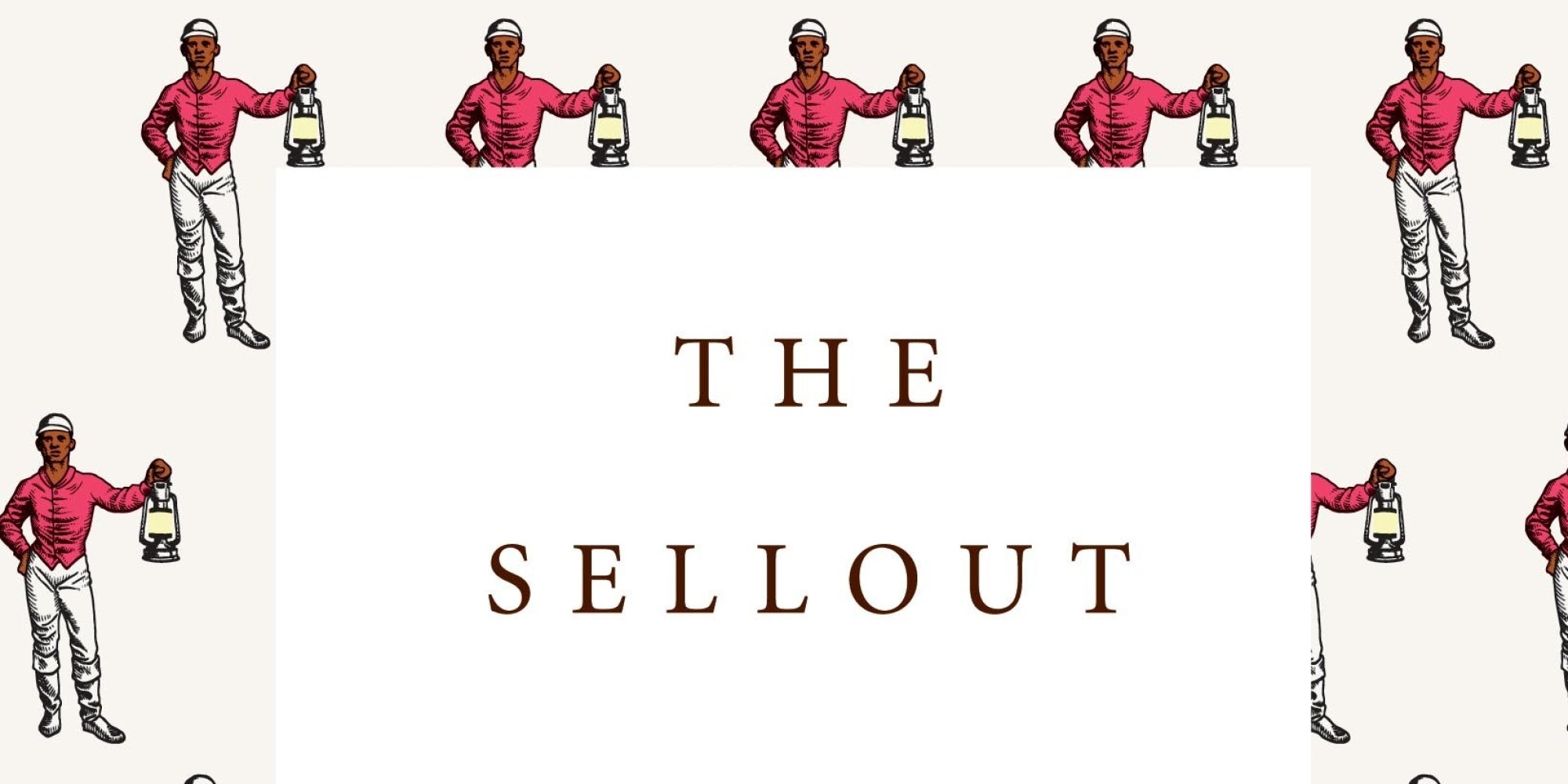
The Sellout by Paul Beatty


“It’s illegal to yell ‘FIRE’ in a crowded theater, right?”
“It is”
“Well, I’ve whispered racism in a post-racial world”

It is very possible that there will never be a better time to read Paul Beatty’s The Sellout. Since America elected a crypto-fascist clown for president you might have asked yourself, more than a few times, how it was possible democracy could do this to us. A professional entertainer whose ascendancy to fame and fortune includes everything from reality TV and professional wrestling to conspiracy theory propagation and, now, rust belt populism is the most powerful man in the world. Everyone, even people who voted for the guy, probably even he himself, is trying to reconcile the sheer possibility that this could even happen. Well, enter Paul Beatty.

Beatty breaks out his war chest - irony, irreverence, allusion, and satire - to tell the unlikely tale of Bonbon; an inner-city African American farmer who proves that there is no transcending race or racial history in America. But Bonbon is no activist, he’s the sellout, the way he proves America is still a nation of white supremacy despite a black president is by segregating the local buses and schools, literally redlining the city in, and owning a slave. If you’re thinking to yourself that this seems too ridiculous or cartoonish, you’re not wrong, but Beatty isn’t banking on you being wrong. With every ridiculous undertaking Bonbon embarks on the idea that America can simply sweep centuries of oppression under the rug becomes the more ridiculous premise.

Bonbon’s motive for rubbing America’s nose in its egregious acts is not even a righteous one, it’s more simple; get Dickens back on the map. Dickens was his ‘hood’ in California and it was so gentrified and resettled by surrounding fancy neighborhoods that it eventually lost its name and standing as a city. The idea here is that America isn’t post-racial, it just hides its ghettos (I’ll likely never hear the words “Detroit is coming back”quite the same way). The racism comes naturally; people respect the segregation on the buss and in the schools (graduation rates are up/violent crime is down), the literal red line in the city give them a sense of spacial identity, and even slavery is amicable. The ease with which America can slip back into these institutions is proof that it hasn’t moved past race, was indeed designed to function on the very idea of racial supremacy. The resulting read is somehow both hilarious and eye opening.

Beatty employs satire at an important time. It is important to lampoon the idea that because we have a black president we are living in a post racial society. It is especially so, given that his predecessor has the full endorsement of the KKK and refused to rent property to black people. This ridiculous time calls for over the top examples and Beatty has the chops to do it. All the usual praise of the great satirists apply: he is biting, deep, funny, and rhythmic. Yet Beatty also rights with an essence that has been absent since Twain himself. America has potentially never needed a racial satirist more than in our coming age of Trump. Ditch your copy of Puddin’ Head Wilson or Huck Finn, pick up The Sellout now.


Tuesday, November 1, 2016

East of Eden by John Steinbeck


Steinbeck considers East of Eden his “other big book” in an obvious reference to his other masterpiece The Grapes of Wrath. He could be referring to the physical size of the books themselves, or their popularity, or even the concepts conveyed inside them and he would be speaking accurately. But what does it mean to be a big Steinbeck book? There are bigger, more popular, and books that are far more deep than East of Eden; what makes it still worth reading? Well, the answer is simple; size does matter.

We contemporary Americans are now vastly interested in the rise and fall of American families. Look at what we watch on TV, our favorite shows went from the portrayal of the day to day goings on of an amicable family in a sitcom to a thriller/drama epic about how one family’s quest for power and the subsequent drama could tear it to pieces. If the general public were more interested in literary pursuits not a library in town could keep East of Eden on the shelves. This could explain why the book was so popular, it’s a very entertaining read. Steinbeck documents the rise and fall of the Trask family; Cyrus and Alice, their kids Adam and Charles, and Adam’s kids Aaron and Caleb. The ensuing drama is that of biblical proportions, a rehash of some of our most juicy original sins. What’s not to love?

Well, frankly, the book is long. It is 300 pages of a story, two pages of intense philosophical/theological discussion, and then 300 pages of another story - which, in a way, is the continuation of the first - to determine whether the theoretical musings of the two page discussion would play out in real time. So yeah, there is about 300 pages of backstory before your conflict is even set up. Albeit, it is very entertaining, conflict filled, backstory and Steinbeck is a famously great writer. His meticulous documentation of landscape and his ability write about key and emotionally harrowing events with such restraint is masterful, artistic, and downright awe inspiring. It also makes you wonder if he couldn’t have done more with less. I’m not one to hark on a book for being too long, but there comes a point where the phrase “unnecessarily long” becomes accurate. I think that point is when an otherwise immensely talented writer begins filling white space with sentimentality.

Steinbeck shouldn’t have had room for sentiment given the size of the ideas he was fleshing out in East of Eden. The question here is whether we are doomed to repeat the sins of our fathers (and mothers, but this book was published in 1952 so women were either unimportantly pure or evil). Adam and Eve as well as Cain and Able take the place of the bolder and the hill in the myth of Sisyphus. Is the bolder going to roll down the hill because of gravity and/or the will of the gods? Or do our descendants have a choice, can they willingly decide to shirk the rules of science or the will of God and end the cycle of sin they have been given. Well, about halfway through East of Eden, Steinbeck is going to point blank lay this argument out to you masked as dialogue and then at the end he’s going to tell you the answer. Why? I don’t know and I wish he hadn’t.

Even still, despite Steinbeck’s best efforts, East of Eden is essential reading. The characters of Lee and Samuel Hamilton are rare crafted gems, the Salinas Valley comes alive, and Steinbeck can be ranked with Shakespeare as a master of merging form and content. In addition to wild entertainment this book offers a study in narrative composition you won’t realize you’re internalizing until you have tears in your eyes at the end.

Tuesday, October 4, 2016

ReWriting the Rules of the American Economy by Joseph Stiglitz


When the 2008 financial crisis struck, Noam Chomsky, influential leftist intellectual extraordinaire (and arguably a dying breed), recommend the United States government enlist Joseph Stiglitz to help drive the recovery as, at the very least, an ideological consultant. Even though the government uncharacteristically ignored the recommendation, the American public should most certainly not. Especially the American left. We should be paying very close attention to what Stiglitz is saying, what he’s doing, and probably what he’ll eventually be screaming.

ReWriting the Rules of the American Economy is by no means the best thing I’ve read by Stiglitz. It lacks the depth found in The Price of Inequality and doesn’t have the bite of any of his Great Divide essays, but it does something far more important than deep exploration or evisceration, something crucial; it better frames the debate.

Essentially, ReWriting the Rules could be seen as a smarter, more concise, but less accessible version of Robert Reich’s Saving Capitalism. Like Reich, it is easy to picture Stiglitz getting exhausted in the endless debate over the free market vs the size of government and, also like Reich, thinking it doesn’t matter. The idea is we need to rewrite the rules so the government works for all Americans, not just some. Once you see the debate this way it is difficult to see it any other way.

Which is good! Stiglitz offers up some great ideas here and it is particularly important for the left now because he’s puts to rest some debates you can currently see raging between the left and the far left, mostly in the wake of Sanders V Clinton. Trade deals for instance; Stiglitz doesn’t like the TPP because it undercuts labor and the idea of transparency in trade. At the same time, he wants America to engage in trade because you can’t have the sort of wealth distribution policies he wants if America’s wealth accumulation is stymied by aggressive protectionism. His compromise? Get a regulatory body (the FTC?), or make one, to regulate business participation in trade deals; making sure they are following a series of rules on the environment, human rights, and labor rights - both at home and abroad - in order to take advantage of free and protected capital flow between nations. Who on the left would not agree with this? Exactly.

The only very real and very frustrating part of this book is the layout. Broken into two parts (three if you count the introduction) titled “The Current Rules” and “ReWriting the Rules”, Stiglitz fractures his problems and proposed solutions in a such a way that makes ReWriting the Rules a less coherent and engaging read.

Nevertheless, there is a lot of potential in ReWriting the Rules of the American Economy to be an ideological unifier of the left, as though Stiglitz is offering his consultancy and all we need to do is pick up his book and start taking his advice.