Friday, August 7, 2020

An Amateur Athlete's Review of Training for the Uphill Athlete


Ok, honestly? I bought Training for the Uphill Athlete because of the pictures. I'm not kidding. I was in Munising this past Feb (seems like 20 years ago, a different time) for the Michigan Ice Climbing Festival and while at a coffee/book shop it caught my eye. Outdoor sports are really good at getting you in the mood to spend money on things you don't necessarily need.

Except it turns out I really did need this book. Which is strange to say because I'm not a mountain runner or skier. I'm an amateur mountain biker and rock climber, I don't race and or compete so there isn't much reason to train for doing so, and I probably never will.

But that doesn't matter because what makes Training for the Uphill Athlete so great is how well it translates things that happen to an active body into easily understandable concepts.


For example, I used to "bonk" like crazy. This would effectively ruin my entire day; I'd have massive headaches and exhaustion after an activity and I ultimately couldn't keep up with my friends if the activity was a little longer. This made long bike rides or hikes to the crag frustrating rather than fun (another reason you want to train; being better at activities and more prepared physically does actually make them more fun).

Turns out, there is a way to train off what is called "Aerobic Deficiency Syndrom" (ADS). My metabolism needed training to burn more fats than sugars, which you can do by engaging in long, low intensity, slow workouts. It was a total game-changer, plus I ended up losing a healthy amount of weight. Did you know you can train your metabolism with exercise? I sure as shit did not.

The "Training" in Training for the Uphill Athlete actually means training your body for your fitness needs, not necessarily for any particular race or event. It throws any sort of fad fitness theories out the window in favor of a comically simple technique; identifying what your body needs (like metabolic training, muscular endurance, recovery, intensity) and training for it. You can do this regardless of being a competitive athlete, but the results amazed me.
The results from my favorite local MTB trail. You can see how even at previous season peaks I was nowhere near my current midseason level. I started really reading this book in May!

The book is also peppered with stories from world-class athletes; their trials, their frustrations, their success etc. It breaks up the textbook feel and really gets you in the right mood. Whomst among us isn't inspired by mountain athletes.

I highly recommend Training for the Uphill Athlete to anyone engaged in or even interested in an active lifestyle. It's accessible, fun, and incredibly useful.

Oh, and the pictures are cool, come on:


Tuesday, June 9, 2020

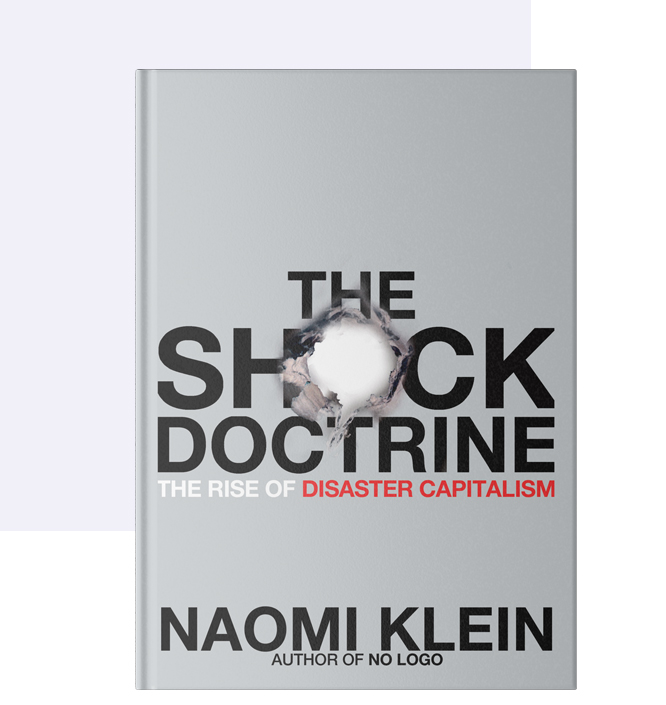
The Shock Doctrine by Naomi Klein


If you want to know what the Shock Doctrine by Naomi Klein is all about, look at what she tells Gail Kastner, a living survivor of one of the CIA's torture programs from the 50s;

"I'm writing a bookabout shock. About how countries are shocked - by wars, terror attacks, coups, and natural disasters. And then how they are shocked again - by corporations and politicians who exploit the fear and disorientation of the first shock to push through econoic shock therapy. And then how people who dare to resist these shock politics are, if necessary, shocked foa third time - by police, soldiers and prioson interrogators."
Or, if you want to know what the Shock Doctrine by Naomi Klein is all about, look the fuck around. We've been shocked by the COVID-19 pandemic, by the government and corporations who have taken the opportunity to expand their wealth and roll back regulations while only tossing crumbs to the rest of us, and now we're being shocked by police brutality all across the country as we rally in solidarity against the austerity and racial violence that's ravaged our communities well before COVID.


 It is almost impossible to express how profoundly important Naomi Klein's Shock Doctrine is. It ties the machinations of capital and imperialism with a tidy bow called the shock doctrine, an idea cooked up by Chicago School economists (generally known for their Libertarianism). Klein delves into the world's largest corporations and their owner's efforts, internationally united under banners like the World Bank and the IMF (or just hiding behind powerful governments), to force countries all over the world and throughout time to seize resources, commodities, cheap labor, and more. They just have to get around pesky things like democracy and popular support for things like social programs.

To do this, the slate must be cleared. People need to be forced into desperate situations, thrown into disorganization, and given little choice over what is to come. Sometimes, this happens after a massive disaster or things beyond the control of the powerful. Sometimes capital will push these situations with tricks like development loans that have austerity and privatization clauses baked in. Othertimes capital will grow impatient and design coups or wars to force it.

Once the citizens are effectively tricked or brutalized into accepting that they aren't in power, massive amounts of wealth transfers ensue. Land, resources, state-owned assets, and even people are forcefully taken or given outright by the corrupted or swindled governments that once held them in the name of the common good. Once, if ever, citizens rise up to speak out and organize against this plunder, the response is torture, the militarized (sometimes privatized) law enforcers, black bags, and bombs.


Klein is there to document all of it (sometimes even physically there as she does quite a bit of on the ground reporting in places like Post-Katrina Louisiana or Post-911 Iraq). "The Shock Doctrine", "the Washington Consensus", "Neoliberalism", whatever you want to call it has been continuously deployed in South America, the South Asia Sea, China, Africa, Russia, Eastern Europe, the Middle East, and even right here in the US. It disproportionally affects BIPOC and the poorest people of the world. It's been deployed by companies like Ford, Chevron, Apple, Boeing, US Steel, Haliburton and more. It won't matter how many flashy, social justice jargon-laden PR statements corporations put out in their new efforts to market shit we don't need, once you read The Shock Doctrine you'll never forget these companies are not on your side.

In fact, there is no going back after reading The Shock Doctrine at all. You'll see it everywhere you look, at scales large and small. Reading Klein's books was probably the biggest shock of all. Learning that capital is organized and living and active in its efforts to direct more of everything in the world that holds value, from tangibles like the rainforest to things as precious as our free time, directly to those that own it, is terrifying. The only question you'll have after reading about it is what you can do to stop it.
 

Monday, February 17, 2020

2312 by Kim Stanley Robinson


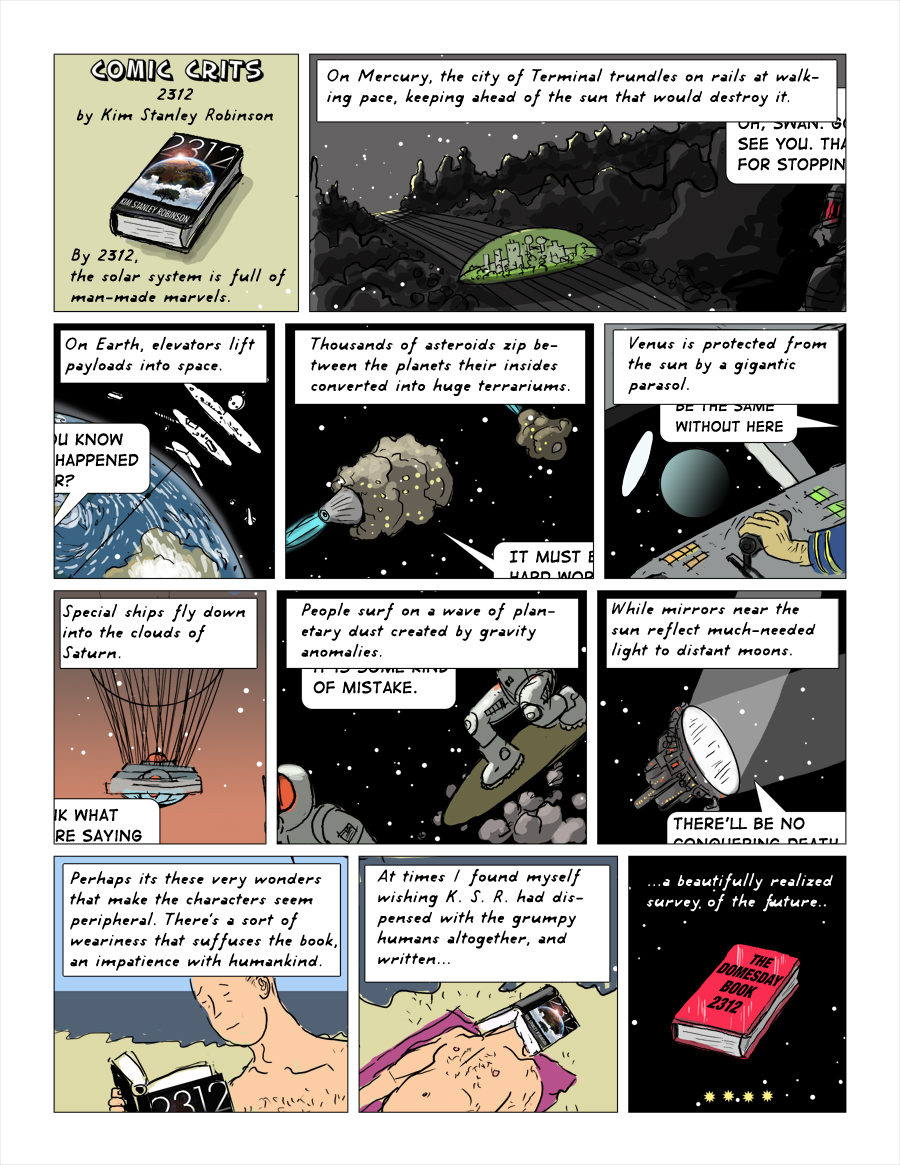
2312 by Kim Stanley Robinson has been on my radar for a while but after hearing his interview on Chapo Traphouse I ran right out and bought it. The way KSR talks about the imperative of a post-scarcity future seemed like it would translate well into science fiction (which I am woefully unfamiliar with). And it really did!

It was a lucky break reading 2312 right after reading Martin Hagglund's This Life, which is all about how the ephemeral nature of life is exactly what gives it meaning. 2312, meanwhile, features a whole cast of characters who frankly don't seem to give a rip about life even while they torture themselves searching for its meaning.

The year is...well, you guessed it... the earth is in dysfunctional, post-climate change ruin (though people still live there) and space is colonized. The contrasts between earth and space are telling; Earth is miserable, bureaucratic, and life there is brutal and short while space seems to be filled with drifting artist types who spend their time building little terrariums on astroids for...artistic expression? Space is post-scarcity, Earth still has war for resources. Space is full of life, Earth isn't.

Two elements make this book for me; first, is the world-building. Robinson introduces his readers to his imagined future in excerpts that read like exercises in trying to put creative flair on technical writing. In style, it makes me think about the chapters in Moby Dick like "Of the Monsterous Pictures of Whales", "Cetology", or "Chowder"; exploratory sections that allow the reader to discover the world through fact and object, rather than through the lens of a character or a plot point (think of the way Rowling builds the wizarding world through Harry's lone interaction with it). This features some of the most breathtaking writing in the book. Heavy description laced with poetry, like Walt Whitman writing your biology textbook.

The second thing was the journey that characters like Swan and Waharm embark on. Not as far as the physical locations they go, but watching these three "spacers" develop an appreciation for life is endearing as hell. In space, your life span is longer, almost infinite, your options are limitless, and it seems hard to die (though not impossible). Even in the aftermath of near-death experiences, the spacers struggle to appreciate the value it should impart on their life: "Our stories go on awhile, some genes and words persist; then we go away. It was a hard thing to remember. And as the lock door closed and they were back inside, [Swan] once again forgot it". So when (**mild spoiler alert here**) in a beautifully written scene, Swan and Waharm repopulate the earth with all its long-extinct animal life because a shared life is a beautiful entity, I was literally tearing up.

So as the Trump administration continues to roll back environmental regulations and entire continents burn, I enjoy reading about a future where life is finally given the value it deserves.

From ComicCrit:http://comiccrits.com/2012/08/2312-by-kim-stanley-robinson/

Thursday, December 26, 2019

Health Justice Now by Tim Faust


"So the question to me is not: can we afford this? It's not even: can we afford not to afford this? It's: this wealth has been stolen from us; this wealth has been stolen from the people of Earth; are we not entitled to collectively benefit from it? Otherwise - when the companies come whispering ruby promises of prosperity, when they drain our land and exhaust our labor, when they disappear to some other place where they can do the same thing cheaper - are we just to clutch our children and suffer silently through the night?"
At some point, about 2 years ago now, I stumbled into becoming a single-payer healthcare activist. It's helpful to surround yourself with all the arguments and facts swirling around out there and luckily there is no shortage of that on the issue of healthcare; single-payer is something we've been trying to do in this country for a long time. I picked up Health Justice Now by Timothy Faust hoping to find a healthcare activist bible, an ultimate collection of, as Faust himself puts it, "nerd shit".

To be clear, Faust delivers on plenty of nerd shit. Health Justice Now outlines our current healthcare system and everything that's wrong with it, what our solutions are for fixing it, and asks us to imagine what might come to pass if our country ever gets its act together on healthcare.

What impressed me so much about this book was how simple its prescription (heh) for our gigantic failure is. Faust argues that human beings are messy and sick, that we will always be messy and sick, and that we (as a S O C I E T Y) should just give them healthcare, no questions asked. What's more, we should stop trying to strive for this magical system where we pinpoint resources at a select few deserving individuals:
"Thus, the dream of a private insurer is a large and uneventuful customer base. A risk-less risk pool. A million cutomers who pay their premiums every month and who never get hepatitis or get into car accidents or get other expernsive conditions. But this corporate-utopian vision doesn't reflect the way illnes works: there are simply always going to be a bunch of people who get sick or who need expensive care. Because the insurer doesn't have the ability to make sick people well, or to prevent illness or accidents in its customers, and absent the ability to just imagine away the customers who cause most of the medical costs, all the private insurer can do is find ways to kick out sick customers, or coerce them into leaving"

This is where Health Justice Now begins to reshape political philosophy. Faust isn't only able to prove that universal programs like single-payer are more effective using his cadre of "nerd shit", he's able to argue that they're more compassionate and humanizing. He helps you understand what making something a "human right" actually means.

I'll admit, I took for granted what making something human right means. But thanks to Faust's reminder in Health Justice Now, I don't think we've made nearly enough things human rights. Our attempt at only delivering social good to those we imagine deserve it has given way to disastrous experiments in means-testing, austerity, and a great forgetting of large swaths of the American public that don't seem to fit our narrative.

I did not imagine that, at the end of this book, I would be reshaping my understanding of justice to encompass all people. Shaking every preconception of conditional inclusion in a just society and jumping up and down after finishing it screaming "an obstacle to one is an obstacle to all". But here we are! Health Justice Now is life-affirming and has the propensity to be very influential to your world view. Read it.


Tuesday, October 22, 2019

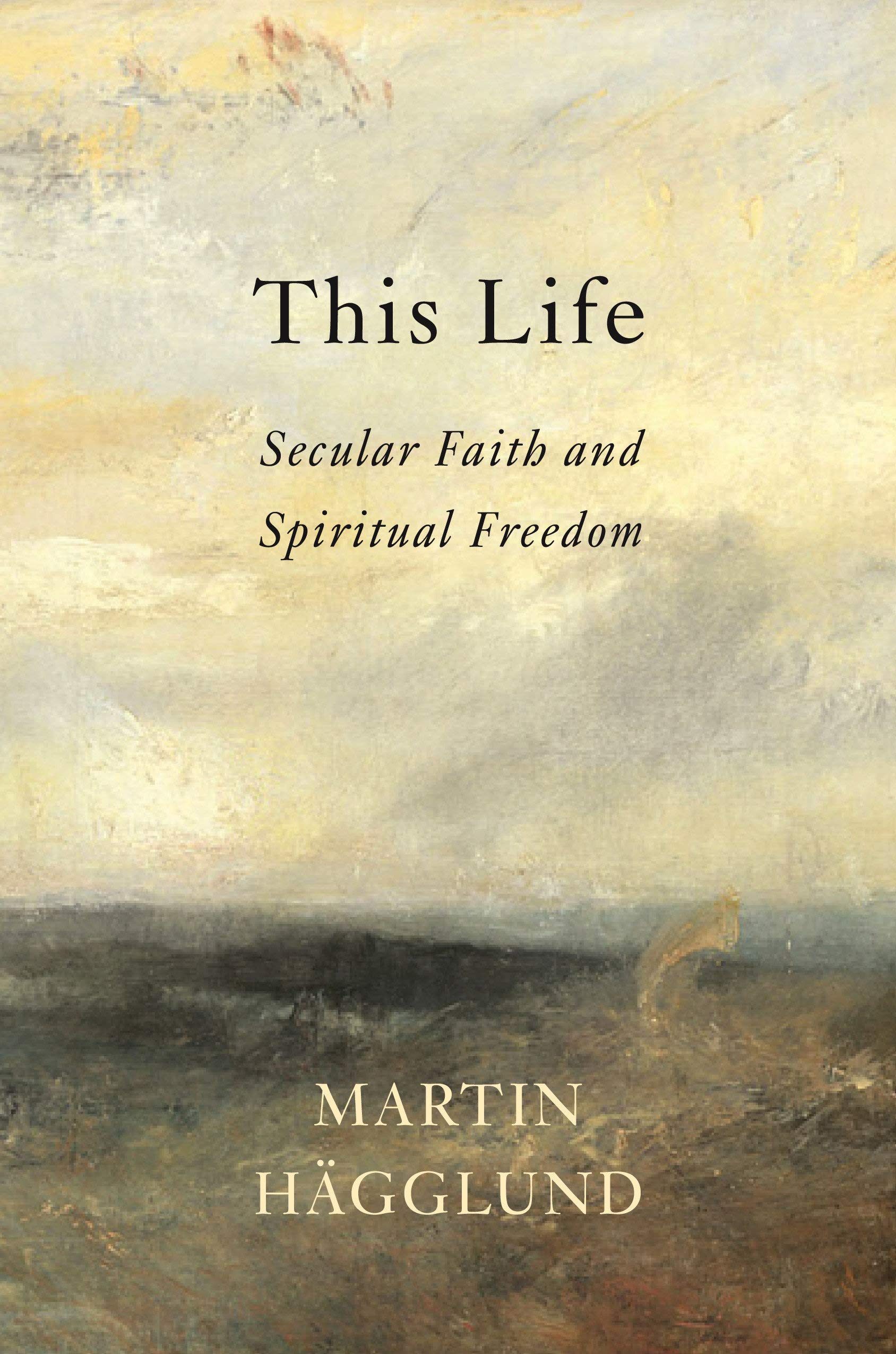
This Life by Martin Hagglund


"Service to God may take the form of caring for the poor and destitute, but the goal is not to emancipate the poor so that they can flourish on the basis of their own evolving commitments and lead their free, finite lives as ends in themselves. The goal of reigious salvation is not to emancipate our finite lives but to save us from the finitude that is the condition of our freedom. As soon as emancipation becomes the goal, we have moved from a religious to a secular practice of care in which our aim is freedom and not salvation. We do not seek liberation from finite life, but rather the liberation of finite life"

This Life by Martin Hagglund basically argues we're all actually atheists and because of that we should be socialists...it's compelling as hell. 

The argument is that we all, at least implicitly, adhere to what Hagglund calls secular faith: "secular faith is a condition of intelligibility for any form of care. For anything to be intelligible as mattering - for anything to be at stake - we have to believe in the irreplaceable value of someone or something that is finite. The secular faith - which the religious aspiration to eternity seeks to leave behind - is expressed by care for anyone or anything living on. Secular faith is a condition of possibility for commitment and engagement, but by the same token secular faith leaves us open to devastation and grief". 

The entire first section of This Life trots out really famous and likable religious thinkers and writers like Martin Luther King Jr. or C.S. Lewis to demonstrate their commitment to the finite lives of everyone around them. This, Hagglund argues, is contrary to a religious faith that dictates our only concern should be for an afterlife. If we truly believed everyone in our lives would live forever what purpose would there be in valuing them? In feeling concern for their suffering? 

Imagine if your car couldn't be destroyed or damaged in any way, would you still drive it and value it as carefully? A less surface-level example: if we thought that our time with our elderly grandparent was infinite - that we'd just see them in the afterlife - would we really make such an effort to spend time with them before their passing?

Once you've been made to understand that we only have one life, Hagglund hits you with the second part of the book; we need to commit ourselves to the task of democratic socialism. This is what Hagglund defines as spiritual freedom. Spiritual freedom is essentially the freedom to pursue what you find most important in life without the constraints of necessary labor. If we only have one life, democratic socialism is the only structural way we can organize society to ensure the most amount of people can live that one life to its fullest. 

This section probably won't treat ardent Marxists to anything new (in fact some may disagree with Hagglund's definition of social value), but I've never seen such a severe argument for free time. As someone who lives in and is aware of a society that functions on the miserable toil of unnecessary labor the idea of redefining our understanding of freedom because we're all gonna die is...something. I'm not really sure how to win the world Hagglund is talking about but he certainly does a hell of a job inspiring me to believe in it.


This leads to my only criticism of Hagglund's work. While it's exciting to see an entire chapter dedicated to Democratic Socialism in such a philosophically rigorous book, it's disappointing to find it doesn't mention the concept of class struggle even one time. Hagglund goes on at length about the shortcoming of many liberal thinkers like Rawls and Mills, Marxist critics like Hayek, all the way to contemporary voices on the left like Naomi Klein and Thomas Piketty and how they fail to correctly redefine Capitalism's measure of value.

Hagglund isn't wrong to do this, in fact, I think his analysis is spot on, it's just that without mentioning how we struggle to win such a conception of value trivializes the problem to one of mere definitions. I'm not going to go to the UAW picket line and ask that the workers there reconceptualize their views on wage labor. I'm going to stand with them and demand more democratic freedom in the workplace. Do their demands fit into Hagglund's? We'll never know. 

But that doesn't really matter, Hagglund's book is an incredibly useful tool in realizing the value of one's life and prioritizing a definition of "freedom" that is actually achievable and that actually means something. While it doesn't offer the best insights on how to get involved in the struggle for such freedom, I still think the argument being made is one that should be shared as widely as possible. 

Friday, July 5, 2019

Girl with Curious Hair by David Foster Wallace


I recently read the short story collection Girl with Curious Hair by David Foster Wallace. The unique aspect of this collection stems from setting almost every story in real moments that occurred in history. The collection reminds you why DFW is a true fiction craftsman but also gave way to some unsettling realizations I have about the author.

The first story - the best IMO - "Little Expressionless Animals" shows DFW at his best. Dancing between reality and fiction, the story outlines the journey of an exceptional Jeopardy contestant and her love affair with the producer's daughter. The constant blurring of that line of what is real and what is not highlights how ridiculous reality can be how. It's fun, thoughtful, and brilliantly composed.

From there the reader is greeted with the collection's title story "Girl with Curious Hair". The piece features realistic settings and concepts but seriously fucks with characterization. It follows a gang of absolute monsters in their exploits in arson, drug exploration, assault, and more. Very reminiscent of a Clock Work Orange.

It's here the collection starts to lose me a bit. I'm not so sure in our time of intolerable cruelty I need to be reading DFW's reality-bending fiction. I'm not saying I want to be comforted by my fiction, but the cruelty displayed in this story tied with the mess of misogyny, racism, and overall power struggles in the stories to come don't need to make you second guess whether men and women are capable of such things.

In the final and longest story, "Westward the Course of Empire Takes Its Way", we're treated to exploratory dialogue on the nature of fiction itself. I get the sense that without a certain amount of off-putting edge DFW feels fiction is little more than a glorified advertisement, meant to make readers feel good. So he strives to make his readers uneasy; characterizing women as impossibly particular, making his characters disfigured in some way, gratuitous violence.

The thing is we never explore why making a character transgender or disabled makes readers uneasy, why playing to these stereotypes and biases for the purpose creeping your readers out is actually harmful in the greater scheme (ironically DFW complained about David Lynch doing this exact thing with Richard Pryor in his review of Lost Highway). One could argue this isn't the point of the fiction, but then what is the point?


Interventions by Noam Chomsky


Noam Chomsky remains cogent as ever in his old age. He's still giving interviews, appearing on Democracy Now, writing, etc. Still, because there are so few voices countering hegemonic US foreign policy the prospect of losing Chomsky is truly depressing. Or it was before reading his book of op-eds Interventions and realizing that time is indeed a flat circle and anything Chomsky has said will apply to all of the exact same things for the rest of time.

For example, tell me if this sounds at all familiar:
"Washington's thorniest problem in the region is Venezuela, which provides nearly 15 percent of US oil imports. President Hugo Chavez, elected in 1998, displays the kind of independence that the United States translates as defiance...in 2002, Washington embraced President Bush's vision of democracy by supporting a military coup that very briefly overturned the Chavez Government. The Bush administration had to back down, however, because of opposition to the coup throughout Latin America and the quick reversal of the coup by a popular uprising".
Interventions is a collection of op-eds by Chomsky during (and in the leadup to) the Iraq War. While each one is short, they work to build a countervailing narrative that we all know now to be true. The takeaway here is not just that Chomsky is right, but rather how easy it is to be right.

US foreign policy is extremely formulaic. Since World War II the US will work discretely to cause unrest in a region in order to apply their disaster capitalist tactics toward privatization, they'll accuse any challenging nation (no matter how small) of being an existential threat, and they'll make up any number of reasons to execute an occupation if necessary.

In reading Interventions, one understands that Chomsky's entire body of work documents this strategy time and time again. It serves as a reminder that we can look to Chomsky and those like him any time state conflict approaches. In the year 2019, as our nation creeps closer to an extended military conflict with Iran, we only have to glance at Chomky's writings on the failure to find Bin-Laden, the source of the post-9/11 anthrax terror, or the Iraqi WMDs:
"for the second 9/11 anniversary and beyond, we basically have two choices. We can march forward with confidence that the global enforcer will drive evil from the world, much as the president's speechwriters declare, plagiarizing ancient epics and children's tales. Or we can subject the doctrine of the proclaimed grand new era to scrutiny, drawing rational conclusions, perhaps gaining some sense of the emerging reality".
As concerned citizens, we owe this level of scrutiny to Chomsky. I wouldn't start out with Interventions as your introductory text, but it definitely makes a great piece to a larger collection.